
Table of Contents
- 1. A Classic 烧肉 Question: What is the Real Difference Between “牛里脊” and “牛五花”?
- 2. Lean Meat Called 牛里脊? The Historical Mystery Behind “Thigh Meat = 牛里脊” in Japanese 烧肉
- 3. The Lean Image from the Imported Beef Era and the 2001 BSE Crisis Turning Point
- 4. 黑5’s Dedication and the “Naming Twist”: Serving 眼肉 for 牛五花 and Thigh for 牛里脊
- 5. Introducing the Star of Our 牛里脊: The Shintama Cut and Its Culinary Depth
- 6. Shintama Cut 1: 三角牛腩 — Delicate Marbling, Sweetness, and Yaki-Sukiyaki Style
- 7. Shintama Cut 2: 芯芯肉 — Fine-Grained Lean Meat and the “Rolling Grill” Technique
- 8. Shintama Cut 3: 龟之子 — Intense Beef Umami and the Power of Lean Red Meat
- 9. Comparison: 3 Key Differences Between Standard 烧肉 and 黑5’s Naming Twist
- 10. Conclusion: 烧肉 History Makes Every Bite Taste Better — Visit 黑5 Tonight
Hello everyone, this is Sondo from 黑5.
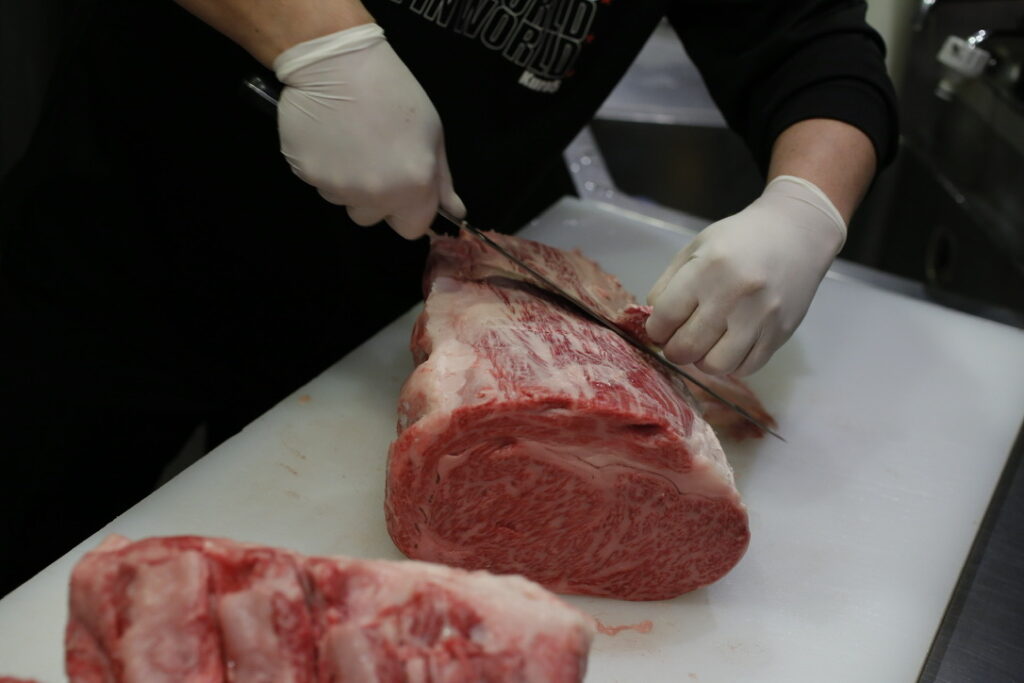
When you visit a 烧肉 restaurant, “牛五花” and “牛里脊” (Rosu) are the two standard options that you see on the menu. How do you choose between them? Many customers order them based on a general impression: “牛五花 is marbled, juicy meat,” while “牛里脊 is lean, light meat,” depending on their mood or appetite that day.
However, if we trace the botanical and anatomical classifications of beef, behind this simple division lies a highly fascinating historical shift and a unique “naming twist” within the Japanese 烧肉 industry. Why is it that “牛里脊,” which anatomically refers to the premium back cuts of the cow, is served as lean “thigh/round meat” in most 烧肉 restaurants today? And why has 黑5 embraced this history to create our own custom menu layout to maximize your dining experience? Today, I would like to unravel this historical mystery of 烧肉 and share the delicious secrets of our signature 牛里脊 cut, the “Shintama.”
1. A Classic 烧肉 Question: What is the Real Difference Between “牛里脊” and “牛五花”?

First, let us review the traditional definitions of 牛五花 and 牛里脊 in 烧肉. These two terms originate from completely different culinary traditions and anatomical parts of the cow.
What is 牛五花?
The word “牛五花” comes from the Korean word for “rib.” In 烧肉, it refers to the meat around the ribs, which is the “short rib” or “flank” (バラ肉 – Bara-niku). This section contains the highest concentration of marbled fat (sashi) in the cow. When grilled, it produces a rich, sweet fat and deep juiciness, establishing the classic image of “牛五花 = rich, fatty beef.”
What is 牛里脊 (Rosu)?
On the other hand, the word “Rosu” is a Japanese adaptation of the English word “roast” (meaning meat suitable for roasting). Anatomically, authentic beef 牛里脊 refers to the back muscles running along the spine, including the “shoulder 牛里脊,” “眼肉,” and “sir牛里脊.” These back cuts are tender, finely grained, and offer a perfect balance of delicate marbling and lean beef. In its original definition, 牛里脊 is a premium cut meant for enjoying elegant, refined marbling and aroma rather than heavy, stomach-coating fat.
Thus, anatomically, “牛五花 = rib/flank” and “牛里脊 = 眼肉/sir牛里脊.” However, if you order 牛里脊 at a casual 烧肉 restaurant in Japan today, you will rarely receive back 牛里脊. Instead, you are almost always served lean “thigh or round meat” (momo). Why did this substitution occur?
2. Lean Meat Called 牛里脊? The Historical Mystery Behind “Thigh Meat = 牛里脊” in Japanese 烧肉

To understand why lean thigh/round meat is served under the name “牛里脊,” we must travel back about thirty years to the era of import beef deregulation and the 2001 BSE (Bovine Spongiform Encephalopathy) crisis—two major events that reshaped the Japanese 烧肉 industry.
During the late Showa and early Heisei eras, casual 烧肉 restaurants primarily served imported beef 牛里脊 (眼肉 or sir牛里脊 from the United States or Australia) under the menu name “牛里脊.” Unlike domestic 和牛, imported beef 牛里脊 is highly muscular and lean, containing very little marbled fat. As a result, Japanese diners grew to associate “烧肉 牛里脊” with “lean, red, non-fatty beef.” This set the first cultural expectation.
Then, in 2001, the BSE crisis struck Japan. Concerns over imported beef safety caused a sudden drop in dining out, pushing the 烧肉 industry into a crisis. Simultaneously, the market price of domestic 和牛 crashed temporarily. 烧肉 restaurants, desperate to win back customers by offering safe, delicious domestic 和牛 at affordable prices, turned their attention to domestic 和牛 “thigh and round cuts” (momo, including inner round, flat, and Shintama).
3. The Lean Image from the Imported Beef Era and the 2001 BSE Crisis Turning Point
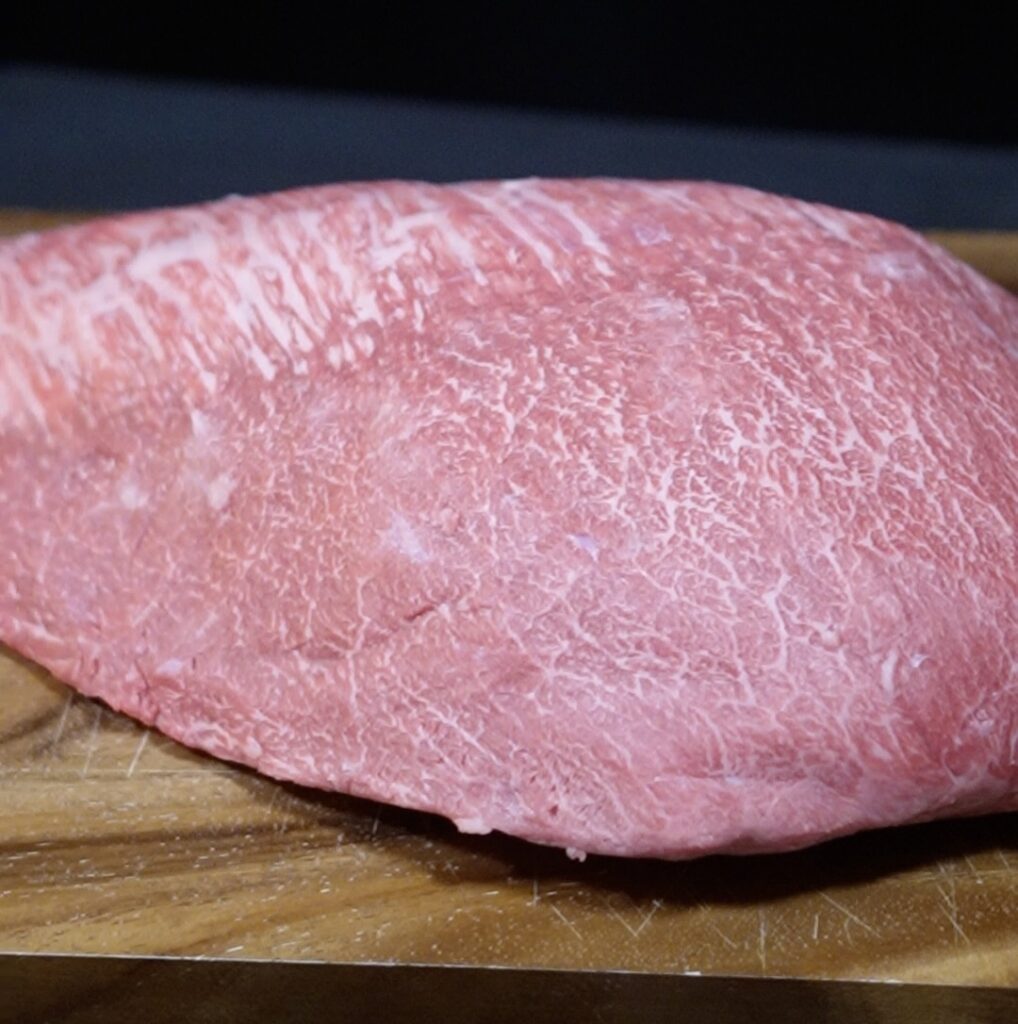
Domestic 和牛 thigh/round meat has a vibrant, deep red color that perfectly matched the visual appearance of the lean “imported beef 牛里脊” customers were used to. More importantly, 和牛 thigh meat contains a high density of amino acids, offering a deep, beefy flavor that far surpassed imported cuts.
For restaurants, using domestic 和牛 thigh meat allowed them to serve high-quality 和牛 under the name “和牛 牛里脊” at an affordable price, which would have been impossible with expensive back 牛里脊 cuts. For customers, it provided a lean, easy-to-eat option that was vastly more flavorful than imported 牛里脊. This alignment of interests solidified the practice, and since the 2001 crisis, serving 和牛 thigh meat as “牛里脊” became the industry standard across Japan.
Consequently, the name “牛里脊” remained on the menu, but the actual cut was replaced by “thigh/round.” This is the historical “naming twist” of Japanese 烧肉. When you order 牛里脊 today and receive lean, deep red meat, you are experiencing the legacy of this industry adaptation.
4. 黑5’s Dedication and the “Naming Twist”: Serving 眼肉 for 牛五花 and Thigh for 牛里脊

At 黑5, we understand this historical context. To offer the best dining experience and prevent digestive heaviness, we have designed our own “custom naming twist” for our menu.
- 黑5’s 牛五花: For our 牛五花, instead of using heavy, high-melting-point stomach flank (bara), we use premium back 牛里脊—specifically “和牛 眼肉” (including Rib-Shin and Maki). 眼肉 fat has a low melting point that dissolves at body temperature, offering a rich, melt-in-your-mouth 牛五花 experience that digests easily without making you feel heavy.
- 黑5’s 牛里脊: For our 牛里脊, to satisfy the customer’s expectation of a lean, clean, yet flavorful red meat, we source the finest cut of domestic A5 和牛 thigh: the “Shintama.”
“Enjoying premium 眼肉 (back 牛里脊) when ordering 牛五花, and enjoying premium Shintama (thigh) when ordering 牛里脊.” This unique menu arrangement is 黑5’s answer to optimizing fat melting points, meat texture, and digestive comfort. It is a calculated culinary design meant to enhance your meal from the first bite to the last.
5. Introducing the Star of Our 牛里脊: The Shintama Cut and Its Culinary Depth

The core of 黑5’s 牛里脊 menu is the “Shintama” (core-ball) cut. The Shintama is a spherical muscle located at the base of the cow’s hind leg. It is celebrated as the premium section of the round, featuring fine muscle fibers and a highly concentrated, savory red meat flavor.
Our chefs manually divide this large primal cut into four distinct sub-primal sections, each with its own marbling profile, grain direction, and texture. The three main sections featured on our menu are “三角牛腩,” “芯芯肉,” and “龟之子.” We source these cuts fresh and never frozen (生), slicing and grilling them to highlight their individual characteristics. Let us look at what makes each cut unique.
6. Shintama Cut 1: 三角牛腩 — Delicate Marbling, Sweetness, and Yaki-Sukiyaki Style

The most luxurious and heavily marbled section of the Shintama is the “三角牛腩” (tri-tip), named for its triangular shape.
三角牛腩 combines the robust, beefy flavor of round meat with the delicate sweetness of back 牛里脊 marbling. The result is a cut that melts smoothly while leaving a rich beef flavor on the palate. At 黑5, we slice 三角牛腩 thinly and serve it as our “Premium 牛里脊” coated in a sweet-savory soy tare. We sear it quickly over 纪州备长炭 炭火 and serve it with a fresh egg yolk, creating our signature “Yaki-Sukiyaki style.” The rich egg yolk pairs beautifully with the caramelized tare and sweet fat of the seared beef. For those who prefer a direct taste of the marbling, grilling it with salt and pepper is also highly recommended.
7. Shintama Cut 2: 芯芯肉 — Fine-Grained Lean Meat and the “Rolling Grill” Technique

Located at the very center (core) of the Shintama is the “芯芯肉”, a highly prized lean cut of beef.
芯芯肉 features exceptionally fine muscle fibers and minimal fat, resulting in a velvety, tender texture that is incredibly smooth on the 牛舌. It lacks the toughness associated with round meat, offering a clean, natural sweetness. At 黑5, we serve 芯芯肉 as our “Up 牛里脊.” To protect its delicate fibers and lock in its moisture, our staff uses a specialized “rolling grill” (ローリング焼き) technique. We sear both sides of the thin slice quickly and roll it into a neat cylinder on the grate. This roll traps the juices inside, preventing the lean meat from drying out. We recommend enjoying this rolled 芯芯肉 with a touch of fresh wasabi and salt to highlight its clean, sweet finish.
8. Shintama Cut 3: 龟之子 — Intense Beef Umami and the Power of Lean Red Meat

Surrounding the 芯芯肉 is the “龟之子”, the leanest cut in the Shintama block. It is named for its grain pattern, which resembles a turtle’s shell.
龟之子 has slightly thicker muscle fibers and almost zero fat, making it the choice cut for lovers of pure, lean beef. It offers a firm chew that releases an intense, savory beef flavor with every bite. We slice 龟之子 very thinly and season it simply with salt. A quick sear over 纪州备长炭 炭火 highlights the natural sweetness of the red meat. At some locations, we also offer it as a thick steak cut (“Otoko Jo 牛里脊”), searing it over high heat to create a flavorful crust while keeping the inside rare. Enjoying it with salt, lemon, or wasabi soy sauce provides a clean, satisfying finish.
9. Comparison: 3 Key Differences Between Standard 烧肉 and 黑5’s Naming Twist
3 Differences Between Standard 烧肉 and 黑5’s Style
1. Menu Names and Actual Cuts:
- Standard Shops: Serve fatty flank (bara) for 牛五花 and standard round (momo) for 牛里脊, which can result in heavy, hard-to-digest fat.
- 黑5: Serves premium 眼肉 (牛里脊) for 牛五花 and Shintama (premium round) for 牛里脊, optimizing fat melting points and flavor density.
2. Preparation and Portioning of Round Meat:
- Standard Shops: Slice the entire round block uniformly, which can lead to uneven texture and dryness.
- 黑5: Manually separates the Shintama into 三角牛腩, 芯芯肉, and 龟之子, cutting each slice according to its grain and marbling.
3. Grilling and Seasoning Pairings:
- Standard Shops: Leave guests to grill the lean meat themselves, which often results in overcooked, dry beef.
- 黑5: Grills each cut using specialized methods—such as “yaki-sukiyaki” for 三角牛腩, “rolling grill” for 芯芯肉, and quick sears for 龟之子, served with tailored condiments.
10. Conclusion: 烧肉 History Makes Every Bite Taste Better — Visit 黑5 Tonight
The names “牛里脊” and “牛五花” hold a rich history, from early import beef preferences to the creative adjustments made by 烧肉 chefs during the 2001 BSE crisis, leading to 黑5’s modern menu layout.
When you visit 黑5 next, we invite you to compare our 牛里脊 and 牛五花 with this history in mind. You will experience the care that goes into portioning our fresh, non-frozen 三角牛腩, 芯芯肉, and 龟之子, and the skill our staff brings to grilling each slice to perfection at your table.
Please join us at 黑5 Honten, Higashiguchi, or 歌舞伎町店 tonight. Enjoy our carefully prepared 和牛 and hospitality as we grill the perfect meal for you. We look forward to welcoming you.
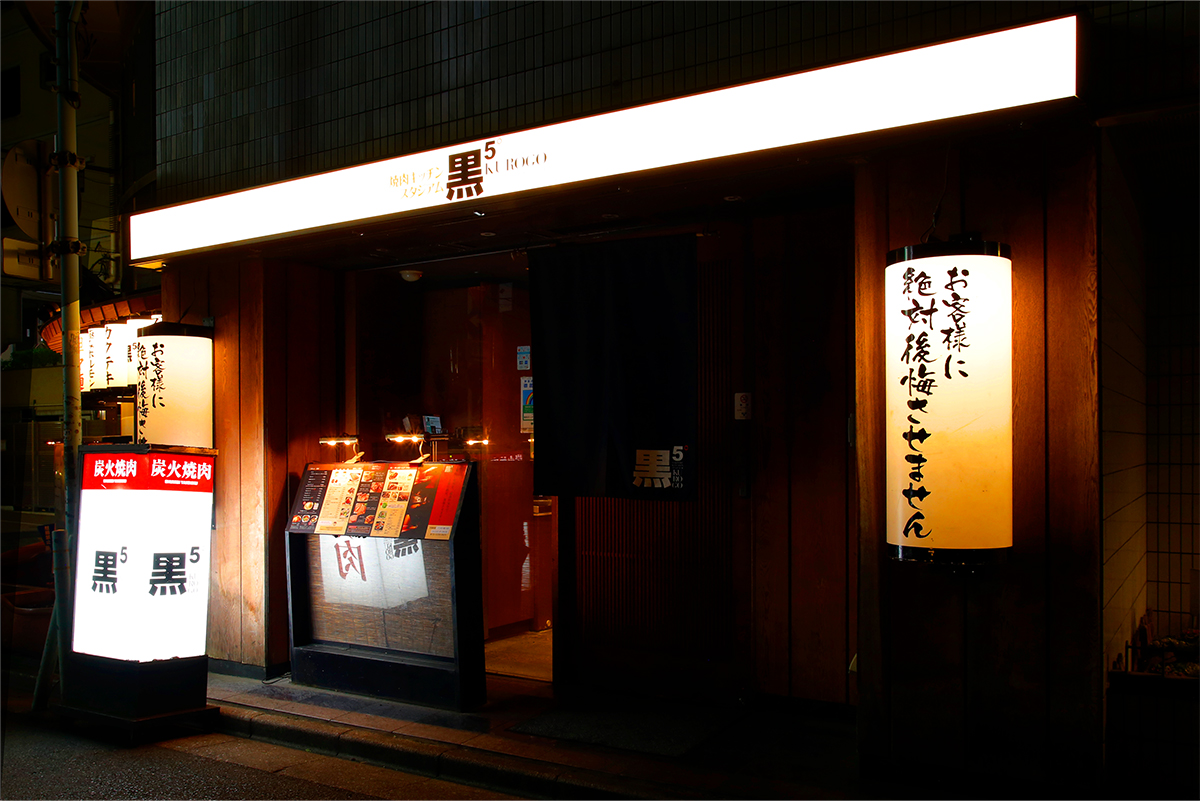
- 炭火 烧肉 黑5 Honten
1F Nishi-池袋 Bldg, 2-46-3 Nishi-池袋, Toshima-ku, Tokyo / 5 min walk from JR 池袋 Station - 炭火 烧肉 黑5 Higashiguchi
1F Tsukiji Bldg, 1-42-16 Higashi-池袋, Toshima-ku, Tokyo / 3 min walk from JR 池袋 Station East Exit - 炭火 烧肉 黑5 歌舞伎町店
1F Sankyo Akagawa Bldg, 2-21-4 歌舞伎町店, Shinjuku-ku, Tokyo

