
Table of Contents
- 1. 横膈膜: The Cut that Captivates 烧肉 Fans and Its Hidden History
- 2. Sweet Fat and Rich Umami: Defining Differences in Meat Quality Between 和牛 and Imported 横膈膜
- 3. The “Meat Shock” Shift: Why 和牛’s Real Value Shines Amid Imported Beef Price Hikes
- 4. Only 2kg per Cow: Sourcing “Raw 和牛 横膈膜” Through Deep Partnerships with Wholesalers
- 5. Our Commitment to Never-Frozen “Raw” Beef: The Science of Cell Walls and Drip Prevention
- 6. A Two-Centimeter Challenge: Why Raw 和牛 横膈膜 Needs No Scoring for Ultimate Tenderness
- 7. Charcoal and Infrared Magic: 黑5’s Grilling Art to Seal in Juices
- 8. Welcoming You Tonight with the Finest Hand-Prepped Raw 和牛 横膈膜
1. 横膈膜: The Cut that Captivates 烧肉 Fans and Its Hidden History

Hello everyone. This is 黑5’s Sondo.
When you visit a 烧肉 restaurant, you might order short ribs (牛五花) or loin (rosu), but there is one particular cut that has a cult-like following: “横膈膜” (skirt steak). Offering a rich, beefy flavor and a satisfyingly tender chew without being overly greasy, 横膈膜 has secured a permanent spot at the top of modern Japanese 烧肉 popularity. From older generations who prefer a lighter bite to younger diners seeking rich, savory satisfaction, 横膈膜 is a versatile favorite that brings smiles to every table.
However, did you know that 横膈膜 is not technically classified as “red meat”? According to the Japanese Ministry of Agriculture, Forestry and Fisheries, 横膈膜 belongs to the category of “organ meats” (horumon). 横膈膜 refers specifically to the thin section of the diaphragm muscle, which, along with the rib-side diaphragm muscle (sagari), forms a breathing organ. Because it is a diaphragm muscle rather than skeletal muscle, it is relatively low in calories compared to standard cuts like short ribs, yet it is packed with the intense, deep umami characteristic of organ meats. The fiber structure is rich and yields a wonderful texture, releasing a burst of hot, savory juice with every bite—a unique charm that sets it apart from standard red meat.
Today, we will focus on this popular cut and explain the defining differences between 和牛 横膈膜 and Imported 横膈膜. We will also explore the recent dramatic price increases in the global beef market, the sourcing secrets that allow 黑5 to secure fresh “raw 和牛 横膈膜” every single day, and the professional grilling techniques we use to elevate its flavor. By the end of this article, your next bite of 横膈膜 will taste deeper and more satisfying than ever before.
2. Sweet Fat and Rich Umami: Defining Differences in Meat Quality Between 和牛 and Imported 横膈膜

What are the differences between 和牛 横膈膜 and Imported 横膈膜? The primary contrasts lie in the distribution of fat (marbling), the depth of the cooking aroma, and the processing state in which the meat arrives in Japan.
First, Japanese Black 和牛 横膈膜 (和牛 横膈膜) is exceptionally thick and features a beautiful network of fine marbling (sashi) woven throughout the muscle fibers. Because of the genetic characteristics of 和牛 cattle and the meticulous care with which they are raised, even organ cuts like the diaphragm develop high-quality, sweet fat. This fat is highly rich in oleic acid, giving it a low melting point that dissolves at body temperature the moment it enters your mouth. The sweetness of the fat and the robust umami of the lean meat merge seamlessly, leaving a luxurious, lingering buttery aroma (和牛 Aroma) after swallowing. This is the scientific reason 和牛 横膈膜 is celebrated as an elite cut of meat, offering an incredibly tender texture where the fibers gently fall apart under your teeth.
On the other hand, imported 横膈膜 from countries like the United States and Australia features a different texture and cutting philosophy. Most imported 横膈膜 is shipped to Japan after being heavily trimmed at the local packing facility. The thick outer fat, membranes, and tough tendons are removed beforehand, arriving as a clean, lean block of beef that is easy for kitchens to handle. In terms of flavor, it offers a strong, iron-rich beefiness and a firm chew, delivering a direct sense of satisfaction that appeals to lean beef lovers. However, it lacks the deep complexity, melting tenderness, and sweet aroma of 和牛. Imported 横膈膜 is best appreciated as a clean, pre-trimmed lean cut rather than a marbled luxury.
3. The “Meat Shock” Shift: Why 和牛’s Real Value Shines Amid Imported Beef Price Hikes

In recent years, the global beef industry has been hit by rapid price hikes known as the “Meat Shock,” affecting both professional 烧肉 restaurants and family dinner tables. A combination of factors—including global population growth, rising demand for beef in emerging economies, severe labor shortages at packing plants, surging grain feed costs, high oil prices affecting shipping, and dramatic currency fluctuations—has pushed the wholesale price of imported beef to unprecedented heights.
To put this into numbers, the wholesale price of US frozen short plates (a staple for many Japanese restaurants) rose by a staggering 360 yen per kilogram in just one year. Specifically, the price jumped from 687 yen per kilogram in January 2021 to 1,047 yen per kilogram in January 2022. This price surge has also impacted imported 横膈膜, with its wholesale cost rising to several times what it was a few years ago. Imported beef, which was once prized primarily for its low cost and high volume, is no longer a cheap ingredient.
This price hike has shifted the way customers choose their dishes at 烧肉 restaurants. In the past, there was a major price gap between cheap imported 横膈膜 and premium 和牛 横膈膜. Today, however, because the cost of imported beef has risen so sharply, that price gap has narrowed significantly.
As a result, spending a little extra to choose 和牛 横膈膜 offers incredible value for money today. More and more guests are realizing that since the price difference has shrunk, it is far more satisfying to enjoy genuine, domestic 和牛 横膈膜. In this shifting economy, the true cost-performance of 和牛 横膈膜 has never been clearer.
4. Only 2kg per Cow: Sourcing “Raw 和牛 横膈膜” Through Deep Partnerships with Wholesalers

While the value of 和牛 横膈膜 rises, the difficulty of sourcing it has reached an all-time high. A single head of cattle (weighing around 600 to 700 kilograms) yields only about 4 to 5 kilograms of 横膈膜. Furthermore, once the kitchen trims away the tough tendons, excess fat, and outer membranes to prepare clean slices for the grill, the edible portion shrinks to a mere 2 kilograms per cow.
Because 和牛 横膈膜 is so scarce and in high demand nationwide, meat wholesalers face a unique challenge: 横膈膜 alone does not generate enough profit for their business. Wholesalers cannot survive by selling only rare 横膈膜. Consequently, they distribute 和牛 横膈膜 preferentially to restaurants that buy whole carcasses (edaniku) or large primals regularly, and to partners with whom they have built long-term relationships of trust over many years.
This means that even a large restaurant chain with massive purchasing power cannot simply buy raw 和牛 横膈膜 on demand. Sourcing it consistently requires a history of mutual respect and cooperation with the meat market.
The reason 黑5 can serve fresh, never-frozen “raw 和牛 横膈膜” daily is the deep partnership we have maintained with our wholesalers since our founding. We show our commitment by buying consistently through all market conditions, paying fair prices, and respecting the wholesalers’ work. Thanks to this mutual trust, we are given priority access to the finest raw 和牛 横膈膜, ensuring our guests always enjoy the best quality available.
5. Our Commitment to Never-Frozen “Raw” Beef: The Science of Cell Walls and Drip Prevention

At 黑5, our absolute rule for 和牛 横膈膜 is that it must never be frozen. While much of the imported 横膈膜 and even some 和牛 横膈膜 on the market is frozen for transport and storage, we refuse to compromise on this point. In the culinary science of beef, freezing makes a massive difference in quality.
When meat is frozen, the water content inside the tissues freezes into sharp ice crystals. As these crystals grow, they puncture and destroy the delicate cellular walls of the meat. When the beef is thawed, the broken cell walls allow the precious moisture to escape as “drip.”
This drip is not just water; it contains the meat’s amino acids, nutrients, and rich umami components. Once the drip escapes, the meat becomes dry, tough, and prone to developing the gamey, iron-like smell typical of frozen-thawed organ meats. No matter how carefully you grill it, frozen-thawed meat can never regain its original juiciness.
By serving only never-frozen “raw 和牛 横膈膜,” 黑5 keeps the cellular structure of the beef completely intact. When placed on the grill, the cells retain all the moisture, fat, and umami inside. The moment you take a bite, the sweet 和牛 fat and savory juices burst forth in a harmony of flavor that is only possible with fresh, raw beef.
6. A Two-Centimeter Challenge: Why Raw 和牛 横膈膜 Needs No Scoring for Ultimate Tenderness

Sourcing high-quality raw 和牛 横膈膜 is only the first step. The next step relies on the skills of our kitchen staff. Because 横膈膜 has a distinct, fibrous structure, the way it is cut determines its final tenderness and mouthfeel.
黑5 serves our raw 和牛 横膈膜 in thick slices of about 2 centimeters. We choose this thickness because we want our guests to experience the full, juicy texture that 横膈膜 has to offer. However, when standard 烧肉 restaurants offer such thick-cut 横膈膜, they usually apply a technique called “scoring” (hidden cuts – kakushi-bocho) to make the fibers easier to bite through. Without it, thick-cut meat can easily become tough and difficult to chew.
At 黑5, however, we never apply scoring to our 和牛 横膈膜. Because our fresh 和牛 横膈膜 has never been frozen, its cellular structure remains completely intact, preserving its natural, melt-in-your-mouth tenderness. It is so tender that you can bite through the thick 2-centimeter cut effortlessly without any scoring.
Furthermore, there is another critical reason we avoid scoring: to ensure a perfectly crispy, caramelized surface sear. If the surface of the meat has fine cuts, the precious meat juices will leak out excessively during grilling, which prevents the exterior from searing properly. By keeping the surface completely whole, 纪州备长炭 charcoal’s powerful far-infrared heat can sear the exterior evenly to a crispy, fragrant finish while locking all the sweet, rich 和牛 juices securely inside the meat. Avoiding unnecessary prep is 黑5’s subtraction philosophy, showcasing the raw ingredients in their purest form.
7. Charcoal and Infrared Magic: 黑5’s Grilling Art to Seal in Juices

Once prepped, the 横膈膜 is ready for the final step: the charcoal grill. 横膈膜 loses moisture quickly if left too long on the heat, causing the fibers to tighten and become rubbery. Grilling requires a careful touch to cook the meat through without losing its juices.
To ensure a perfect cook, 黑5’s trained staff grill the meat for you at your table as part of our signature tableside service.
We use premium 纪州备长炭 charcoal, which generates intense, dry heat and powerful far-infrared waves. Unlike gas fires, which release water vapor as they burn, 纪州备长炭 charcoal cooks the meat quickly from the inside out while searing the surface to a crisp, caramelized finish.
The secret to grilling 横膈膜 is to avoid high, direct flames. We place the meat in the stable, medium-heat zone of the grate and flip it repeatedly. By flipping the meat frequently, we ensure that the surface does not burn and that the melting fat circulates back into the center, basting the beef from within. This slower, patient grilling method creates a beautiful contrast: a crispy, fragrant exterior and a tender, juicy interior that locks in all the sweet 和牛 juice. It is the ultimate way to bring out 120% of the raw 和牛’s natural flavor.
8. Welcoming You Tonight with the Finest Hand-Prepped Raw 和牛 横膈膜
A simple plate of 横膈膜 highlights the sourcing, prep, and grilling standards of a 烧肉 restaurant. 黑5 puts the extra effort into sourcing fresh 和牛, precise hand-slicing, and grilling over 纪州备长炭 charcoal because we want your first bite to be truly memorable.
The sweet aroma of 和牛 fat, the rich depth of the meat, the precision of our kitchen staff, and the dry heat of 纪州备长炭 charcoal work together to show what 横膈膜 can truly be.
Tonight, at our 池袋 Honten, 池袋 East Exit, and 新宿 歌舞伎町 locations, we have our charcoal fires ready and our finest raw 和牛 横膈膜 prepped. We look forward to welcoming you for an exceptional 烧肉 dinner.
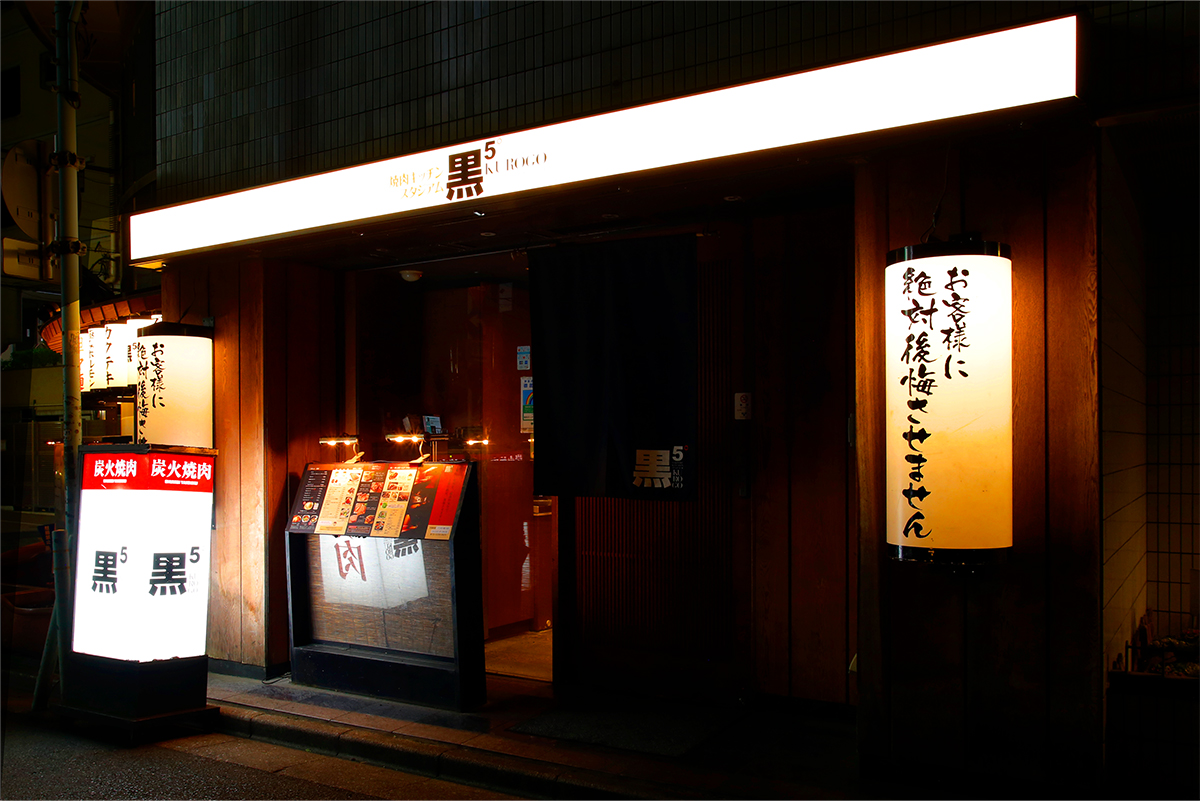
- Charcoal 烧肉 黑5 Honten
Nishi-池袋 Bill 1F, 2-46-3 Nishi-池袋, Toshima-ku, Tokyo / 5 min walk from JR 池袋 Station - Charcoal 烧肉 黑5 Higashiguchi
Tsukiji Bill 1F, 1-42-16 Higashi-池袋, Toshima-ku, Tokyo / 3 min walk from JR 池袋 Station East Exit - Charcoal 烧肉 黑5 歌舞伎町
Sankyo Akagawa Bill 1F, 2-21-4 歌舞伎町, 新宿-ku, Tokyo

