
Table of Contents
- 1. More Than Just Spicy Red Soup: The Deep World of Classic 烧肉 Soups
- 2. The Icon of Spicy-Savory Soup: The Origin of “Yukkejang” and Its Beef & Vegetable Mix
- 3. Chunky Beef in a Soy-Base: The Origin of “牛五花 Soup” and Its Mild Richness
- 4. A 烧肉 Staple 30 Years Ago: Why Has “韩式大酱牛肉汤” Disappeared From Menus?
- 5. Cod Fish vs. Tail Beef: The Double Meaning of “Degu” and Daegu Region History
- 6. Sourcing No Cheap Belly Ribs: Why 黑5 Has No 牛五花 Soup on the Menu
- 7. The Core of All Our Soups: Our House-Made Pressure-Cooked Komtan 牛骨高汤
- 8. Comparison: 3 Key Differences Between Yukkejang, 牛五花 Soup, and 韩式大酱牛肉汤
- 9. Recreate Chef Quality at Home: Ordering Our Frozen “Rich Soup” 牛骨高汤
- 10. Conclusion: Knowing Soup Differences Makes Your 烧肉 Finish Even More Enjoyable
Hello everyone, this is Sondo from 黑5.
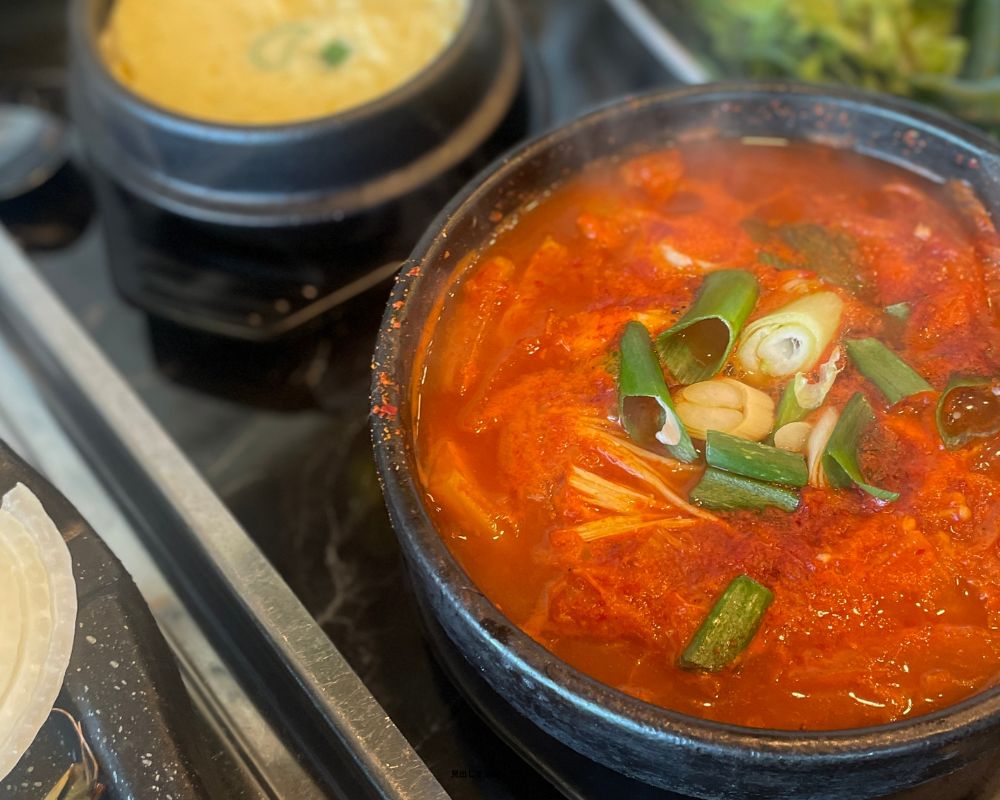
After enjoying a full course of grilled 和牛, the ultimate way to finish your meal is with a warm bowl of soup placed over the table grate. Looking at the menu, you will see names like “Yukkejang Soup,” “牛五花 Soup,” and at older traditional establishments, “韩式大酱牛肉汤 Soup.” Because they all look red and spicy, many guests wonder what sets them apart and end up ordering the same item every visit.
In fact, these three classic soups feature different ingredients, cuts of beef, seasoning bases, and historical origins. In particular, “韩式大酱牛肉汤” (or Tegutan) was an absolute staple in 烧肉 restaurants 30 years ago, but due to its double meaning and complex preparation, it has largely disappeared from modern menus. Today, I would like to explain the differences between Yukkejang, 牛五花 Soup, and 韩式大酱牛肉汤, the history behind 韩式大酱牛肉汤’s disappearance, and how 黑5 prepares our signature soups.
1. More Than Just Spicy Red Soup: The Deep World of Classic 烧肉 Soups

烧肉 soups are more than simple salt or soy broths; they carry a rich tradition of chili spice and savory seasonings. Simply using the same spicy base with different toppings does not produce authentic chef-quality results.
Some soups are designed to complement the rich fat of grilled beef, while others highlight the natural sweetness of vegetables or the deep umami of bones and seafood. Understanding these distinctions allows you to select the ideal finish to your meal. Let us examine the craftsmanship and history behind these classic red soups.
2. The Icon of Spicy-Savory Soup: The Origin of “Yukkejang” and Its Beef & Vegetable Mix
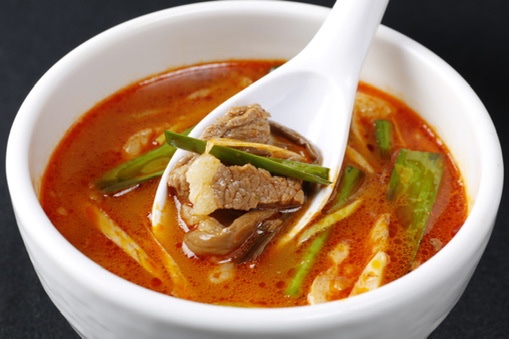
The most famous spicy 烧肉 soup is “Yukkejang.”
Its name carries an interesting history. In Korean, “Yuk” means beef. The term “Kejang” originally referred to a spicy soup made by boiling dog meat with vegetables for summer stamina. Over time, beef replaced dog meat as the primary ingredient, and the dish became known as “Yukkejang” (beef-based Kejang).
Yukkejang features shredded beef (often hand-pulled trim) and vegetables (bean sprouts, bracken/zenmai, green onions, chives) sautéed in Korean gochujang chili paste, garlic, sesame oil, and red chili flakes before being simmered in rich broth. The natural sweetness of the vegetables balances the heat of the chili, creating a thick, spicy-savory broth. It is a hearty, vegetable-rich soup designed to be enjoyed as a meal in itself.
3. Chunky Beef in a Soy-Base: The Origin of “牛五花 Soup” and Its Mild Richness
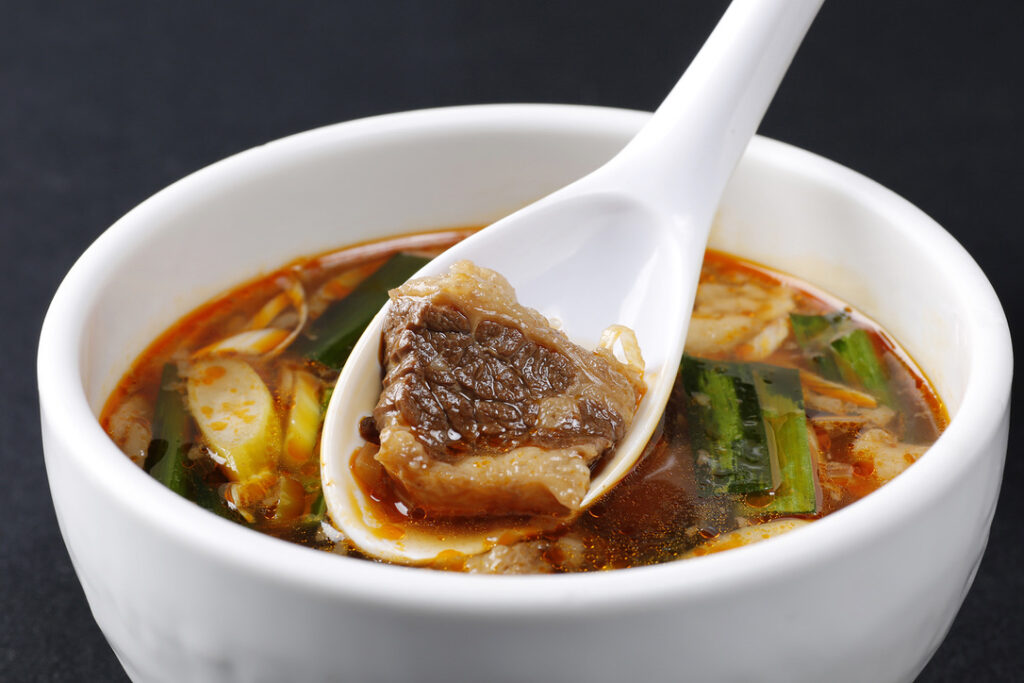
Another favorite alongside Yukkejang is “牛五花 Soup” (牛五花-tang). While both are often served red and spicy in Japan, their composition is very different.
As the name suggests, “牛五花” refers to beef short ribs. Unlike Yukkejang, which features shredded beef and abundant vegetables, 牛五花 Soup highlights large, chunky portions of bone-in short rib or rib meat.
In terms of seasoning, 牛五花 Soup uses a simple soy sauce or salt base rather than gochujang, letting the natural beef flavor shine. The ribs are slow-simmered for hours until the meat slides off the bone, releasing rich fat and collagen into the broth. It features a milder heat and a comforting sweetness from the rib fat. Vegetables are kept to a minimum (typically radish or green onions), keeping the focus entirely on the tender beef ribs.
4. A 烧肉 Staple 30 Years Ago: Why Has “韩式大酱牛肉汤” Disappeared From Menus?
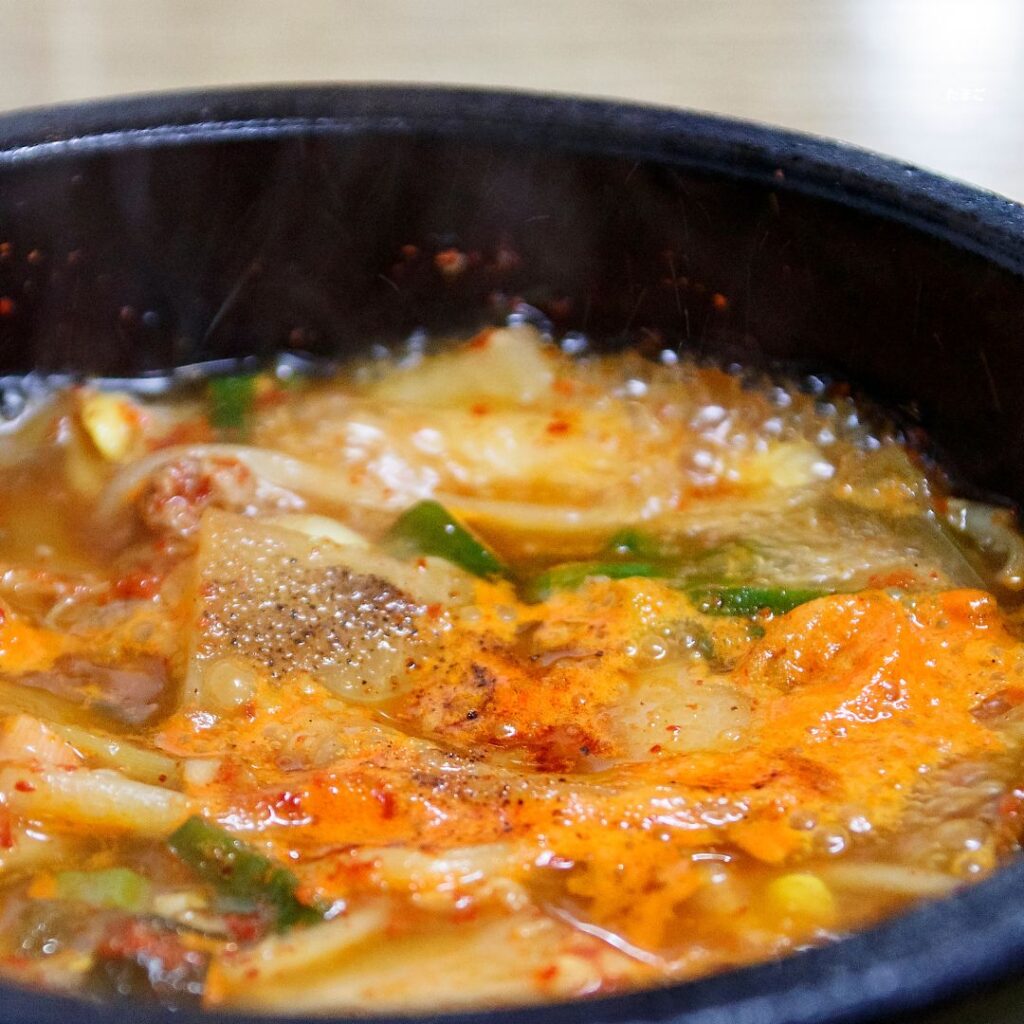
In Japanese 烧肉 restaurants during the late Showa and early Heisei eras, the three major soups were Yukkejang, 牛五花 Soup, and “韩式大酱牛肉汤” (Tegutan). If you dined at 烧肉 establishments 30 years ago, you likely remember seeing it on the menu. Today, however, 韩式大酱牛肉汤 has vanished from most locations.
This disappearance occurred due to three main factors:
- “Customer confusion regarding what the dish actually contained”
- “A decline in demand for spicy seafood broths at 烧肉 restaurants”
- “The labor-intensive prep work required to shred the meat, which exceeded kitchen cost limits”
- “The double meaning of the name ‘韩式大酱牛肉汤’ in Korean culinary history”
5. Cod Fish vs. Tail Beef: The Double Meaning of “Degu” and Daegu Region History
The primary cause of confusion with 韩式大酱牛肉汤 is its etymology, which has two completely separate origins.
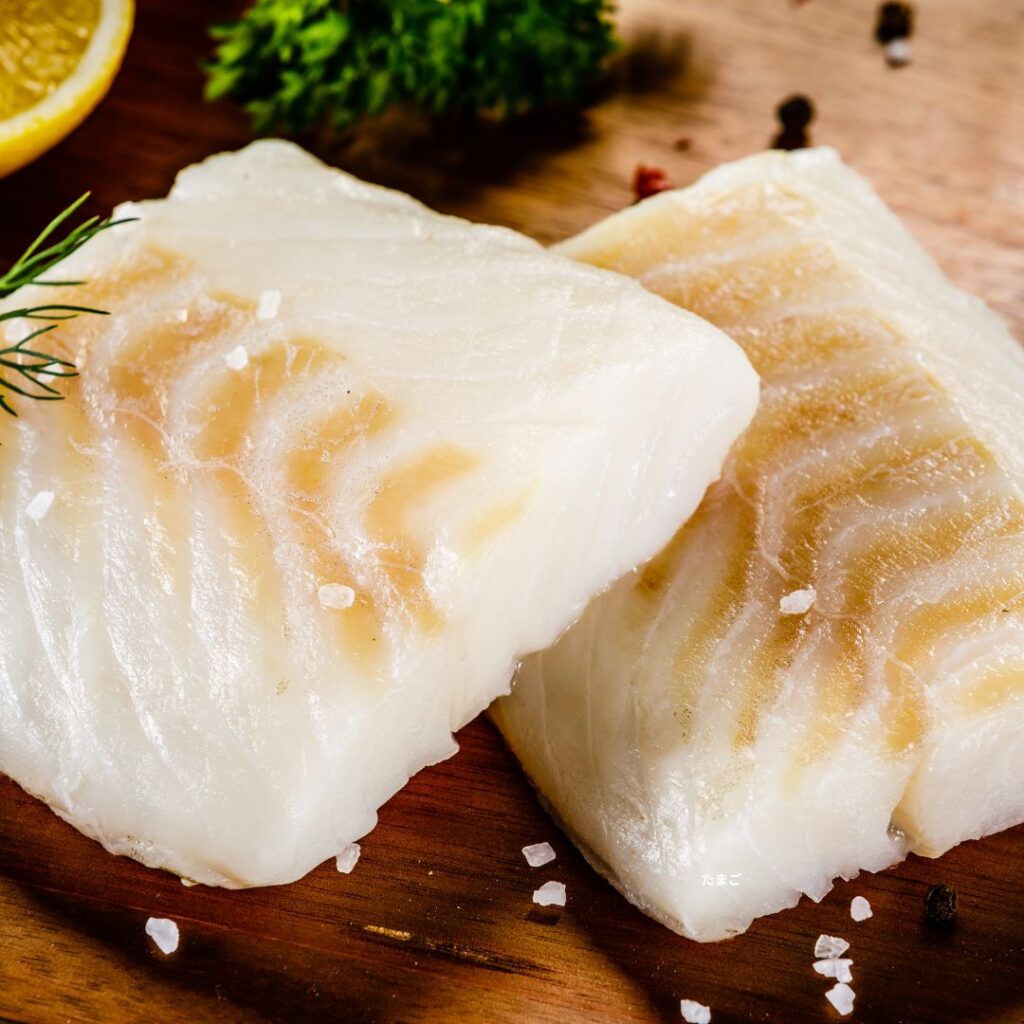
Origin 1: The Korean Word for “Cod” (Degu)
In Korean, cod fish is called “Degu” (대구). Therefore, in traditional Korean cuisine, “韩式大酱牛肉汤” (대구탕) refers to a spicy, clean cod fish soup simmered with cod fillets, radish, and water dropwort (seri). It is similar to a spicy Japanese cod hot pot.
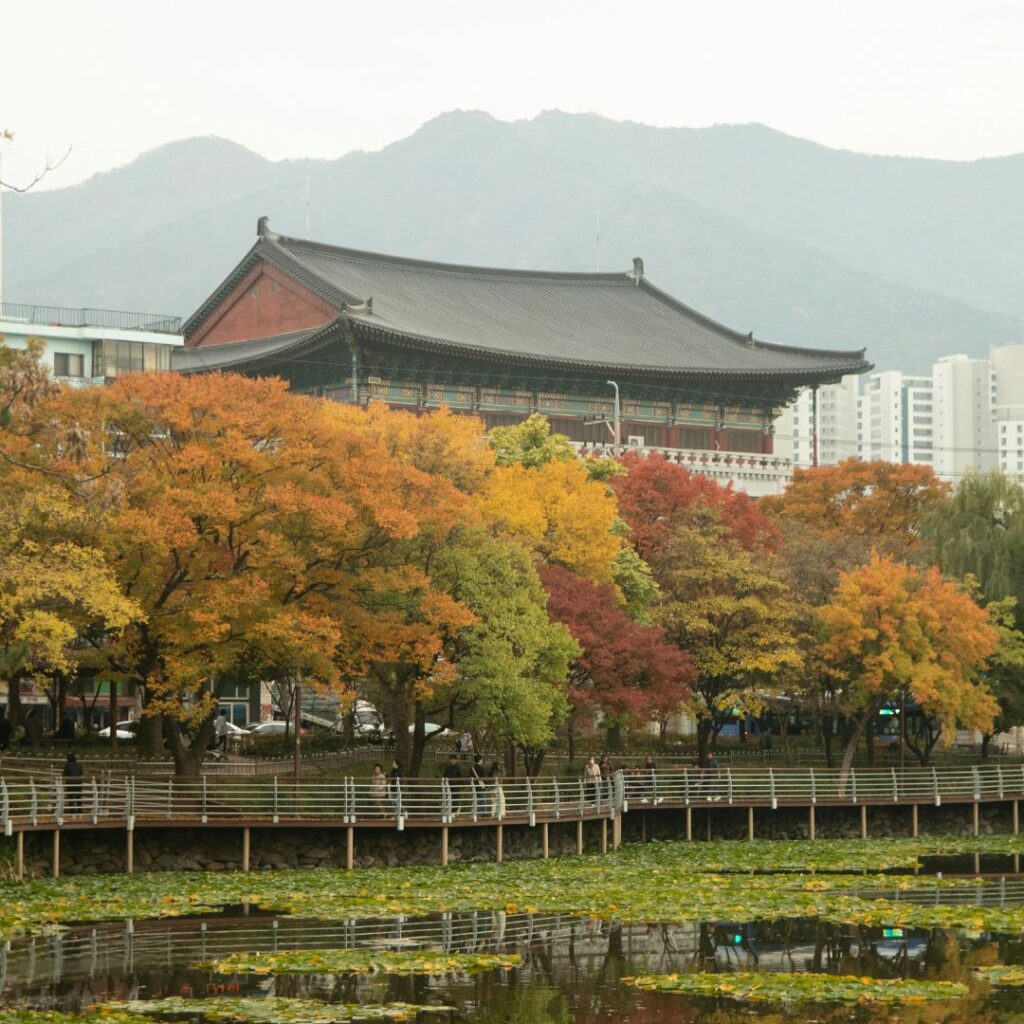
Origin 2: The Daegu (Degu) Region Beef Tail Soup
On the other hand, the Daegu (대구) region in southeastern Korea was famous for a local dish made by slow-simmering beef tail meat and vegetables in a spicy, Yukkejang-style broth. This regional soup was also called “韩式大酱牛肉汤” (soup of Daegu).
When these two dishes were imported to Japan, they created confusion. Some 烧肉 restaurants served “spicy cod fish soup” as 韩式大酱牛肉汤, while others served “spicy shredded beef tail soup.” Guests could never be certain if they would receive fish or beef when ordering. Over time, fish soup proved unpopular among 烧肉 diners, and the labor required to shred beef tail meat was high, leading most Japanese restaurants to drop 韩式大酱牛肉汤 from their menus.
6. Sourcing No Cheap Belly Ribs: Why 黑5 Has No 牛五花 Soup on the Menu

Guests viewing our menu sometimes ask why we serve Yukkejang but do not offer 牛五花 Soup. This decision stems from 黑5’s commitment to beef quality.
Standard 牛五花 Soup uses trimmings or outer cuts of beef belly (Bara). However, 黑5 does not source beef belly at all.
For our 牛五花 plates, we use premium, finely marbled 眼肉 (rib-roos) rather than standard belly meat to provide our guests with tender, digestible beef. Because we do not carry cheap belly rib cuts, we do not make 牛五花 Soup. Instead, we use premium A5 和牛 眼肉 trim in our house-made 牛骨高汤 base to create our signature Yukkejang.
7. The Core of All Our Soups: Our House-Made Pressure-Cooked Komtan 牛骨高汤
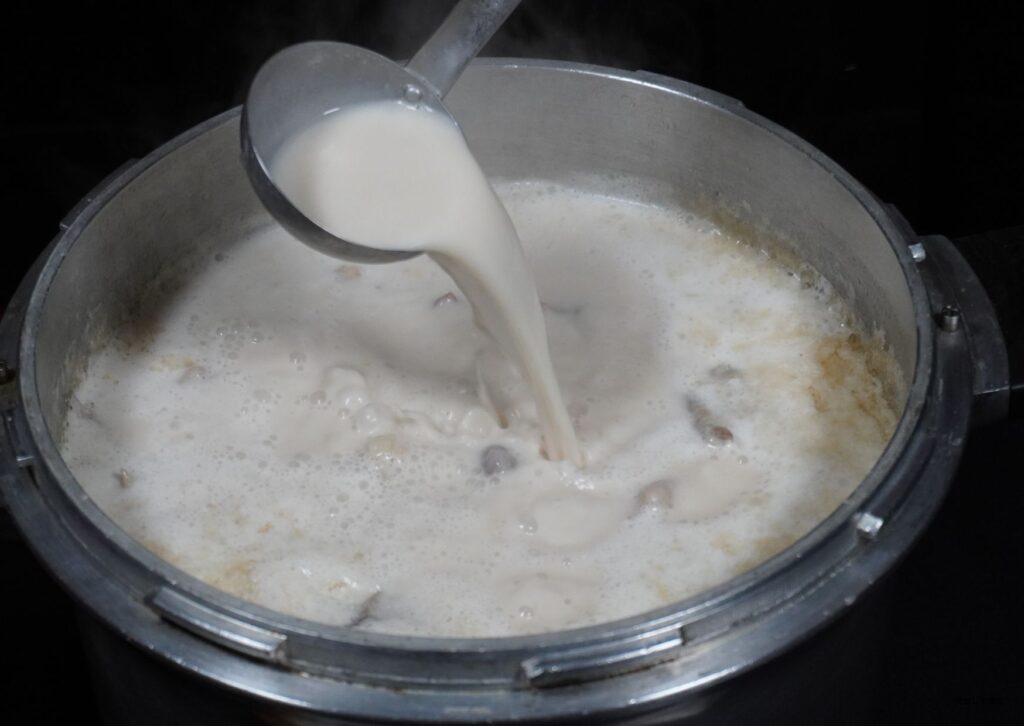
While 黑5 does not serve 牛五花 Soup, our Yukkejang and Komtan soups deliver exceptional depth. This flavor is built on our house-made Komtan 牛骨高汤 (牛骨高汤 base).
We prepare our broth daily by cracking domestic beef marrow bones (genkotsu) and chicken feet (momiji) to expose the marrow. We then cook them in high-pressure stockpots at temperatures exceeding 100°C to emulsify the marrow, collagen, and amino acids into a milky-white broth.
We do not use dairy or additives to artificially whiten our broth; its color and texture come purely from extracted marrow. This rich 牛骨高汤 base cushions the heat of the chili in our Yukkejang, balancing the spice with a smooth, savory beef marrow finish.
8. Comparison: 3 Key Differences Between Yukkejang, 牛五花 Soup, and 韩式大酱牛肉汤
3 Key Differences Between Yukkejang, 牛五花 Soup, and 韩式大酱牛肉汤
1. Primary Ingredients and Meat Cuts:
- Yukkejang: Shredded beef trim cooked with abundant vegetables (bean sprouts, green onions, bracken).
- 牛五花 Soup: Chunky slices of bone-in short rib or rib meat with minimal vegetables.
- 韩式大酱牛肉汤: Varies by restaurant between “cod fish fillets and cod bones” or “shredded beef tail meat.”
2. Soup Base and Seasoning:
- Yukkejang: Flavored with gochujang (chili paste), sesame oil, garlic, and red chili for a rich, spicy-savory taste.
- 牛五花 Soup: Seasoned with soy sauce or salt for a mild, sweet beef broth.
- 韩式大酱牛肉汤: Clean fish-chili broth for the cod version, or a thick, spicy tail-broth for the beef version.
3. Availability in Japanese 烧肉 Restaurants:
- Yukkejang & 牛五花 Soup: Popular staples found in nearly every 烧肉 restaurant today.
- 韩式大酱牛肉汤: Common 30 years ago, but now rare due to cod/beef double meanings, low demand for fish soup, and intensive prep work.
9. Recreate Chef Quality at Home: Ordering Our Frozen “Rich Soup” 牛骨高汤
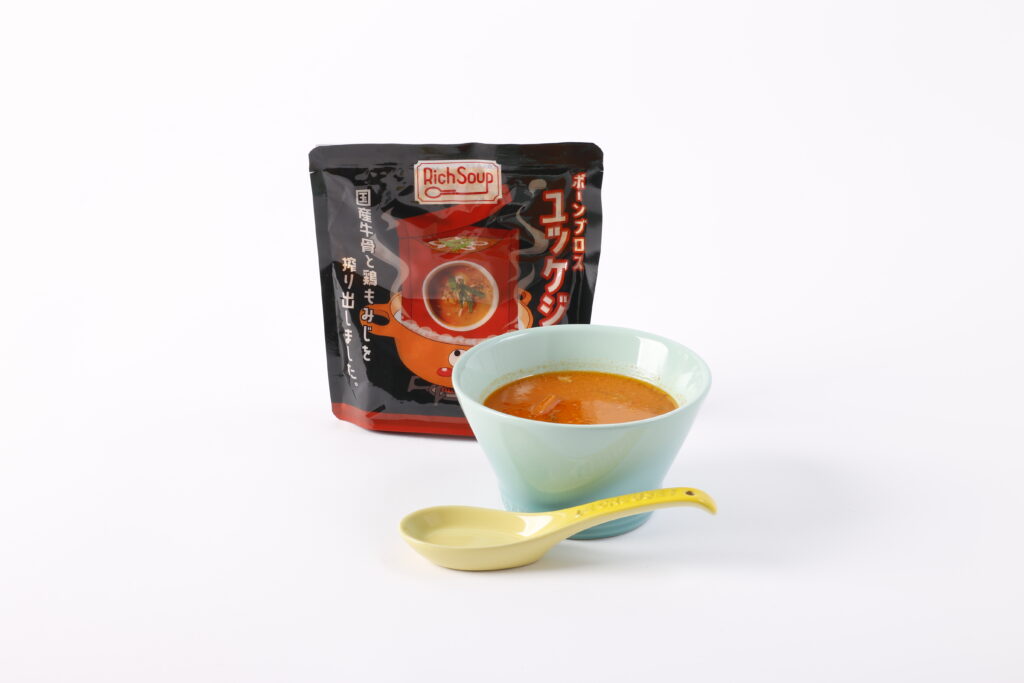
Our pressure-cooked Komtan 牛骨高汤 serves as the foundation of 黑5’s soups. To let guests enjoy this marrow broth at home, we offer our premium delivery product: “Rich Soup.”
Prepared in pressure stockpots using the same beef marrow bones as our restaurant soup, “Rich Soup” is frozen to preserve its natural amino acids and collagen with zero artificial additives or preservatives. Thaw and heat the pack, then add gochujang, beef trim, and vegetables to recreate 黑5-style Yukkejang at home, or enjoy it plain to support digestion and wellness.
You can order “Rich Soup” directly from our official Rakuten store via the link below.
Order 黑5 “Rich Soup” on Rakuten Here
10. Conclusion: Knowing Soup Differences Makes Your 烧肉 Finish Even More Enjoyable
烧肉 soups carry interesting culinary histories. Even a simple bowl of soup represents a thoughtful combination of meat cuts, regional cooking styles, and historical developments.
While 黑5 does not serve 牛五花 Soup because we choose not to source standard beef belly, we offer our signature Yukkejang made with A5 和牛 眼肉 trim and pressure-cooked 牛骨高汤.
We invite you to visit 黑5 Honten, Higashiguchi, or 歌舞伎町店 tonight. Complete your 烧肉 dinner with a bowl of our signature Yukkejang soup, and enjoy the difference.
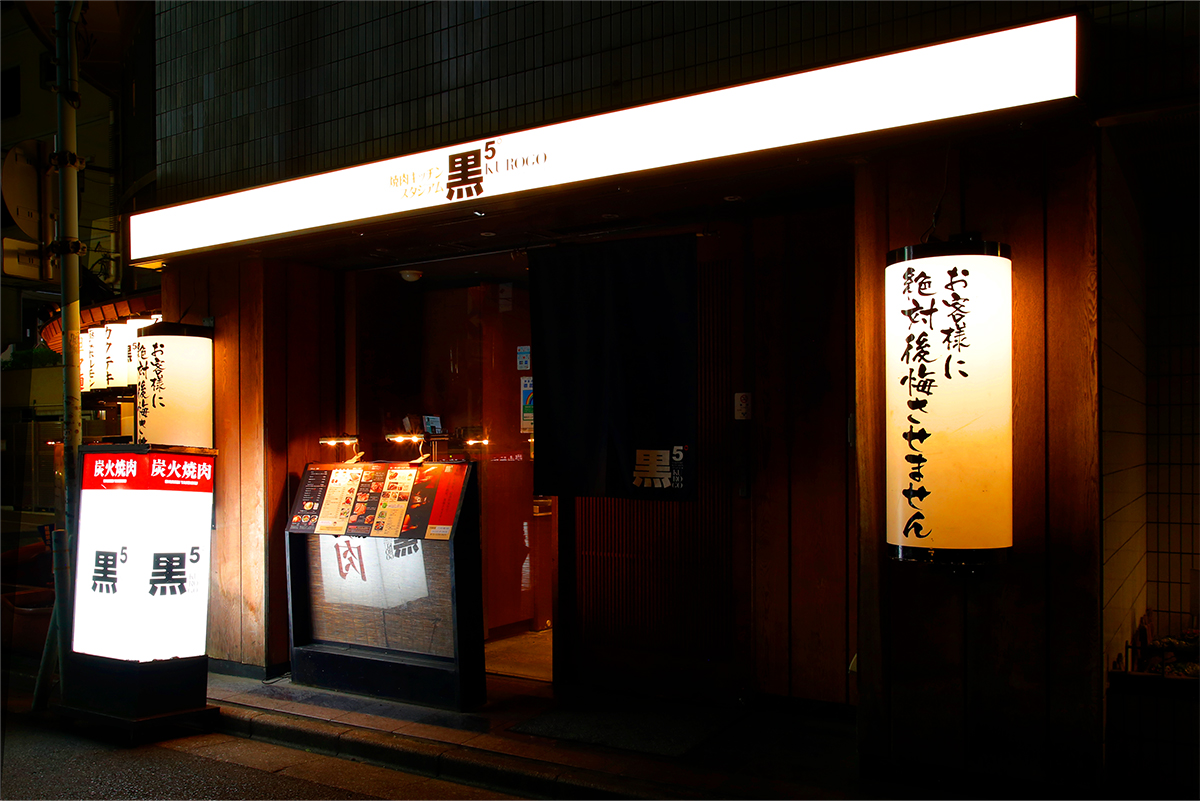
- 炭火 烧肉 黑5 Honten
1F Nishi-池袋 Bldg, 2-46-3 Nishi-池袋, Toshima-ku, Tokyo / 5 min walk from JR 池袋 Station - 炭火 烧肉 黑5 Higashiguchi
1F Tsukiji Bldg, 1-42-16 Higashi-池袋, Toshima-ku, Tokyo / 3 min walk from JR 池袋 Station East Exit - 炭火 烧肉 黑5 歌舞伎町店
1F Sankyo Akagawa Bldg, 2-21-4 歌舞伎町店, Shinjuku-ku, Tokyo

