
“Draft beer and 牛五花 for now!”

Don’t you say this phrase almost like a greeting when you go to a 烧肉 restaurant? Sizzling sounds on the grill, dripping fat falling onto the charcoal, and savory smoke rising up. The rich umami that spreads as soon as you put it in your mouth, and that magic that makes you eat white rice endlessly… In Japanese 烧肉 culture, “牛五花” is truly the undisputed ace and overwhelming star. 烧肉 without 牛五花 might be like a movie without a lead actor, or perhaps sushi without wasabi.
However, let me introduce a piece of 烧肉 trivia you can proudly share at the dinner table. Did you know that in beef butchery terminology and Japanese meat retail quality standards, an official cut named “牛五花” does not actually exist?
Even if you look at meat blocks in a butcher’s showcase, you will naturally not see an official label that says “牛五花”. 牛五花 is originally a Korean word meaning “ribs”. In other words, it is a menu name that refers to the meat around the ribs, which is generally called “Bara” (rib/belly meat) in Japanese butcher terminology. It can be said that it is not the name of a cut, but a name that became established as “a dish or menu item of grilling meat around the ribs”.
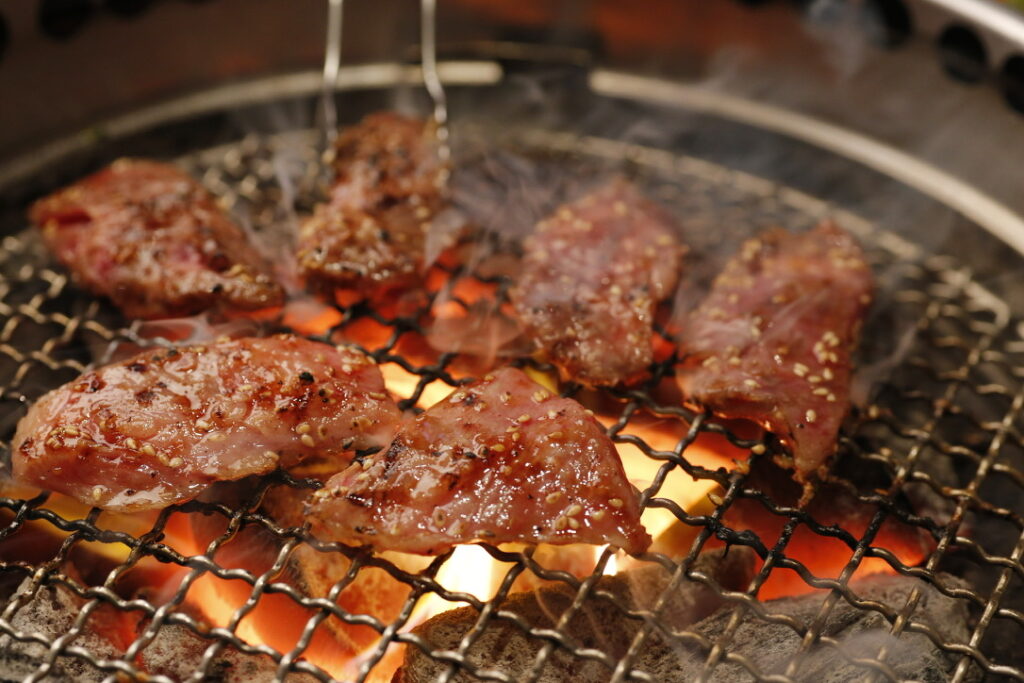
“Wait, that premium 牛五花 I always eat was just regular rib meat?” Some of you might be slightly disappointed, but please rest assured. Even though we simply say rib meat, the area around the ribs of a cow weighing hundreds of kilograms is extremely vast. The muscles around the ribs, which the cow constantly moves to breathe, have an extremely strong umami flavor and store plenty of high quality fat. Depending on whether it is close to the neck or close to the bottom of the stomach, the meat quality and fat marbling differ completely, revealing a truly profound world.
Dissecting 牛五花! The breakdown of rib meat you should know
When you open a menu at a 烧肉 restaurant, you often see rankings like “牛五花”, “Jou 牛五花” (Premium 牛五花), and “Tokujou 牛五花” (Super Premium 牛五花). That is not simply a difference in how it is cut or the freshness of the meat. The difference largely comes down to “which part of the meat is cut and used” from the vast rib area. Here, let’s dissect the representative cuts traditionally served as 牛五花 in detail, along with their individual characteristics.
1. Shoulder Rib (Sankaku Bara)

Often served as “Tokujou 牛五花”, this is truly the king of rib meat. It is the meat around the base of the cow’s front legs, from the 1st to the 6th ribs, and is called so because the shape of the cut block is a beautiful triangle. It is a rare cut where only a few kilograms can be taken from a single cow. Beautiful marbling easily forms here, and when placed on the grill, artistic fat melts out, whipping up flames. It features a texture that melts like snow in your mouth and a sweet fat that hits your brain directly, allowing you to enjoy a luxurious and punchy taste that screams, “This is ultimate 烧肉!”
2. Tomobara (Outer and Inner Rib)
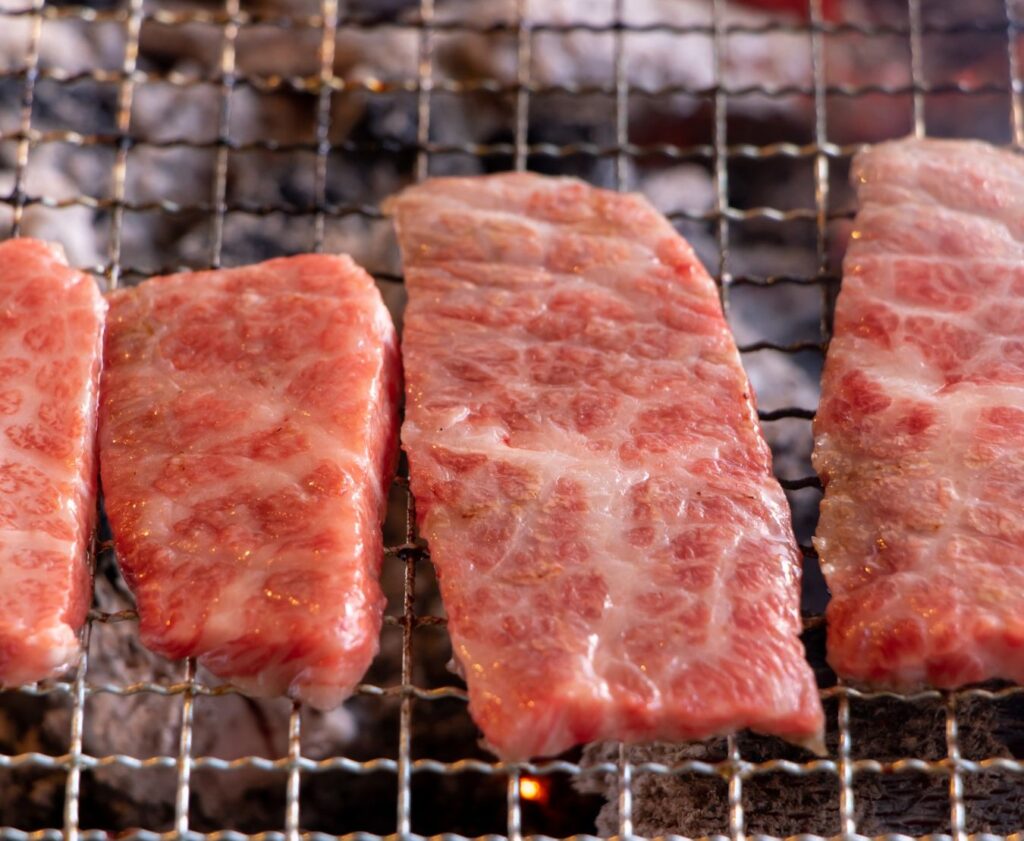
Generally, the part often served as standard “牛五花” is this section called Tomobara. It is the meat located right in the middle of the cow’s stomach, where the lean meat and fat form beautiful layers (so called three layered meat). This Tomobara is further divided into “Inner Rib” (Naka Bara) and “Outer Rib” (Soto Bara).
The Inner Rib is close to the internal organs and has strong sweet fat, making it extremely juicy and a perfect match for sweet and spicy soy sauce based 烧肉 tare (sauce). On the other hand, the Outer Rib has slightly firmer muscle fibers and a chewier texture than the Inner Rib, allowing you to slowly savor the deep, original umami of the meat.
3. Kainomi (Flap Meat)
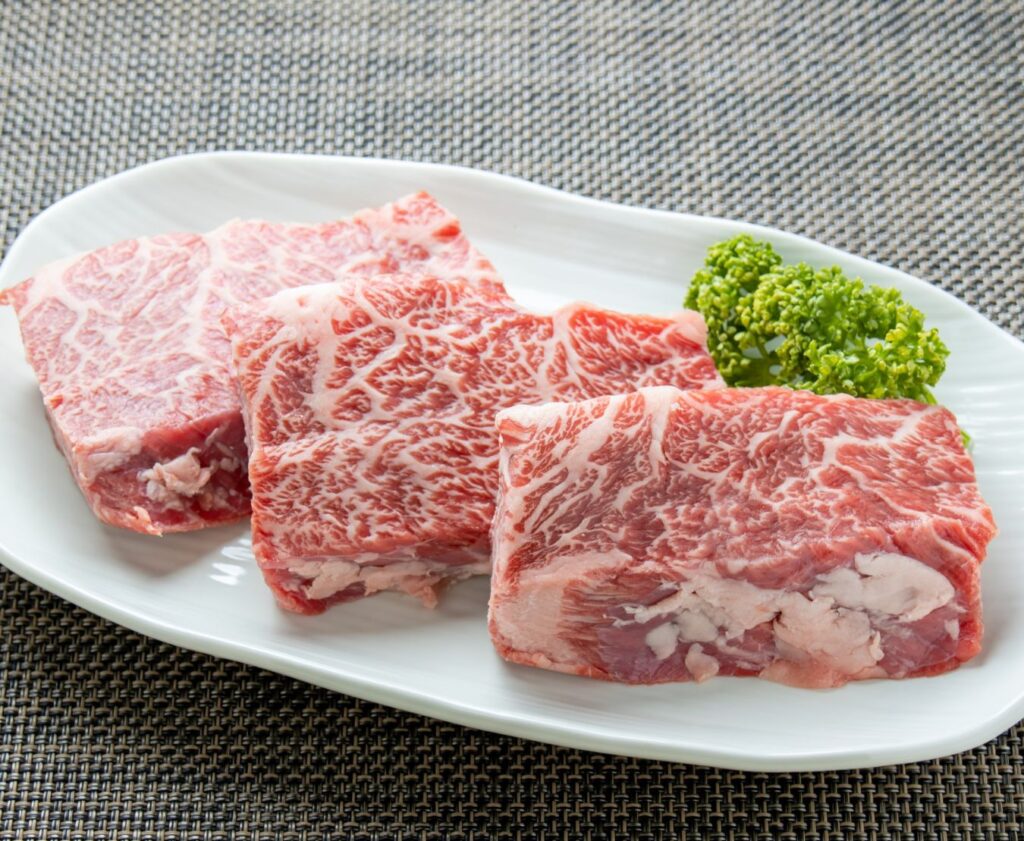
Although it is part of the Inner Rib, it is located very close to the tenderloin on the cow’s back side (the highest grade of lean meat and the least moved muscle). Therefore, while being rib meat, it has an elegant tenderness like tenderloin. The cut shape resembles a clamshell, which is how it got its Japanese name. Because it has the unique umami of rib meat but is not too greasy, and the taste of the lean meat is very strong, it is a highly sought after rare cut passionately supported by mature 烧肉 fans who say, “I love 牛五花, but recently the fat is too heavy…”
4. Sasami (Flank)
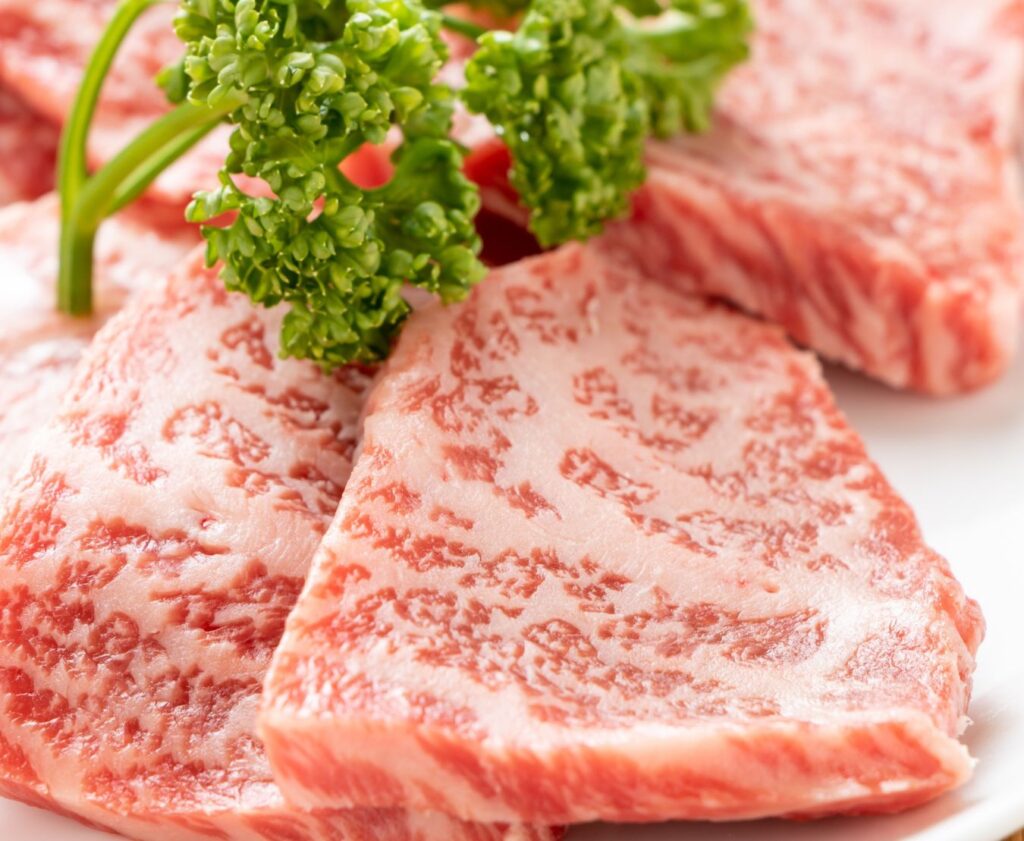
A part of the Outer Rib, located near the base of the thigh (hind leg side). It got its name because the beautiful, fine marbling inside the lean meat looks like bamboo leaves (sasa). Compared to other rib meats, it is relatively light, featuring an elegant taste without any heaviness. Enjoying it with salt or wasabi soy sauce rather than sweet sauce allows you to feel its maximum potential.
5. Nakaochi 牛五花 (Rib Finger / Geta 牛五花)
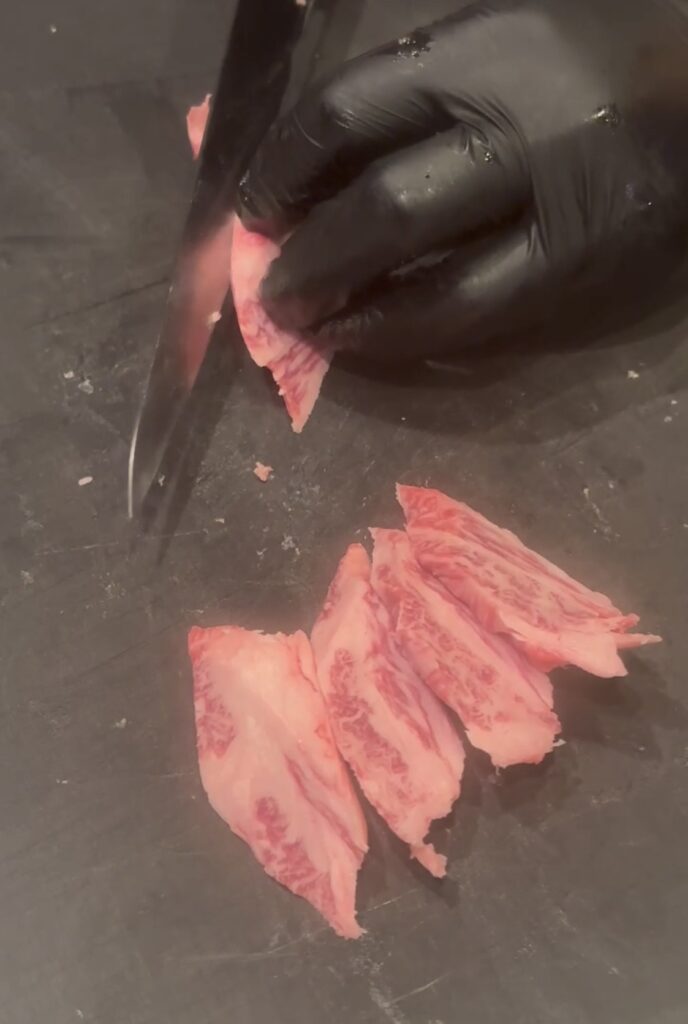
Located between the rib bones, this is literally the intercostal muscle. After the bones are removed, the bumpy shape resembles the teeth of traditional Japanese wooden clogs called “Geta”, so it is also called “Geta 牛五花”. True to the meat lover’s proverb “the meat around the bone is the most delicious”, the umami is tightly condensed at the cellular level, and rich meat juice overflows the more you chew. Because it is a well used muscle, it has some tendons and a chewy texture, but by dicing it or carefully scoring it with a knife, it transforms into an incredibly popular cut with an exquisite texture.
In this way, even if we simply say “牛五花”, there are actually various cuts with unique tastes hidden within. Next time you eat 烧肉, imagining the anatomy of a cow like, “Where on the cow is today’s 牛五花 from? The bottom of the stomach? Or near the front legs?” will satisfy your intellectual curiosity and make the experience even more enjoyable.
The History of 牛五花: Why did it become the undisputed ace in Japanese 烧肉 restaurants?
Now that we understand the secrets of the cuts, let’s take a time travel trip into the “History of 牛五花”. 牛五花 is now synonymous with 烧肉, but it was actually after World War II that it became so mainstream in Japan.
Japanese 烧肉 culture started from Horumon-yaki
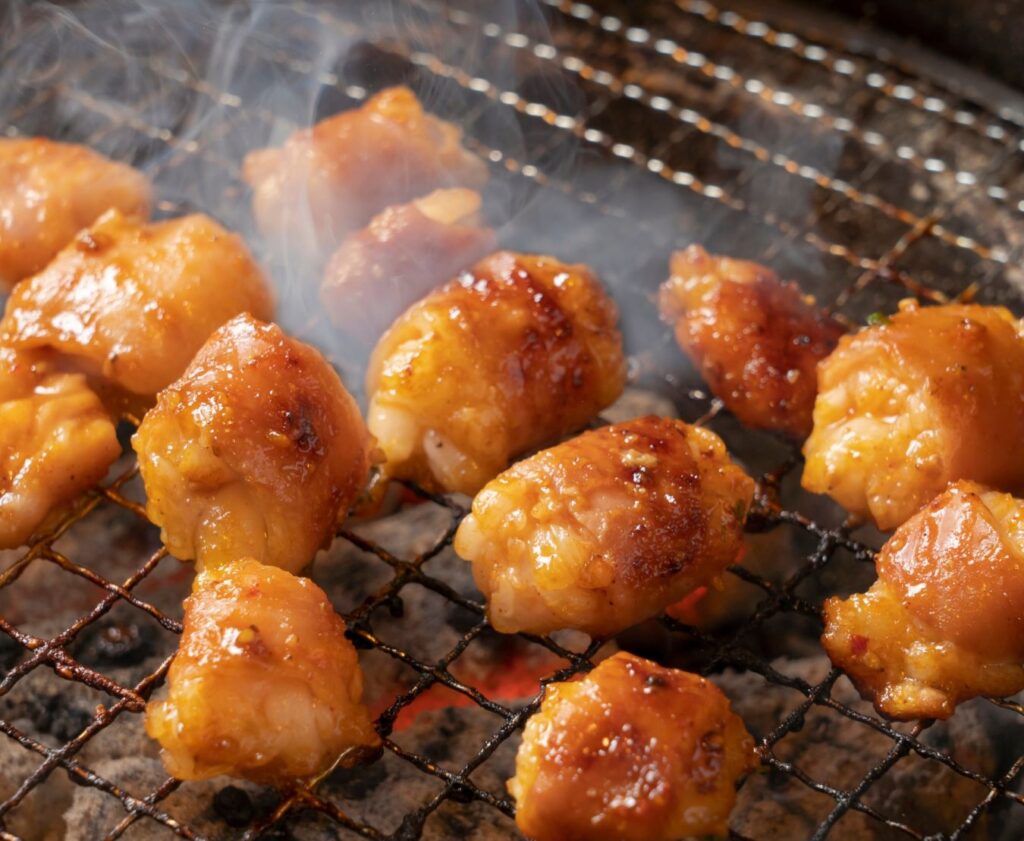
Originally, Japanese 烧肉 culture is said to have roots in the “Horumon-yaki” (grilled offal over open fire) food stalls started by Korean residents in Japan at black markets after the war. At that time, red meat (like 牛五花 and Loin) was an extreme luxury item and distribution was limited, so it was not something commoners could casually grill on a net and eat. The mainstream style was taking cheap and accessible offal, massaging it in a strong flavored sauce, and grilling it.
Unique evolution and localization from bone-in to boneless
However, entering the period of high economic growth, as Japan as a whole became wealthier, red meat began to be gradually served at 烧肉 restaurants alongside offal. At that time, “Bone-in 牛五花” (a Korean traditional meat dish where bone-in beef ribs are marinated in a special sauce and grilled), which was eaten at celebratory occasions in Korea, began to be widely offered in Japanese 烧肉 restaurants.

In authentic Korea, the mainstream style was grilling a large piece of bone-in meat on the net and dynamically cutting it with scissors while eating. However, Japanese people had a deeply rooted food culture of “eating elegantly in bite sized pieces using chopsticks”. Therefore, restaurants gradually started removing the bones beforehand and serving neatly pre cut, bite sized “Boneless 牛五花”. This is the prototype of the Japanese “牛五花” we are familiar with today.
And the affinity between the rich sweet fat of 牛五花 and the sweet and spicy sauce that fused Japanese soy sauce and Korean spices perfectly matched the palate of Japanese people who deeply love white rice. The blissful experience of “putting piping hot 牛五花 soaked in sauce on the rice and wrapping the rice to eat” pushed 牛五花 to become the absolute ace of the 烧肉 world. The history of 牛五花 can be said to be a delicious history of cultural exchange, where Japanese and Korean food cultures beautifully merged and underwent a unique evolution to suit Japanese table manners.
Recent 烧肉 Trends: The rise of “牛五花 that isn’t rib meat” and the breakthrough of Ribeye

Up to this point, we have talked about the traditional “Rib meat = 牛五花”, but actually, right now in the Reiwa era, a new paradigm shift is occurring in the environment surrounding 牛五花. That is the rise of “牛五花 that does not use rib meat”.
Evolution to accommodate adult concerns about “heavy fat”
“I used to be able to eat many portions of 牛五花 easily, but lately the fat feels heavy and one slice is enough. I’ve completely turned into a 横膈膜 (skirt steak) or lean meat person…”
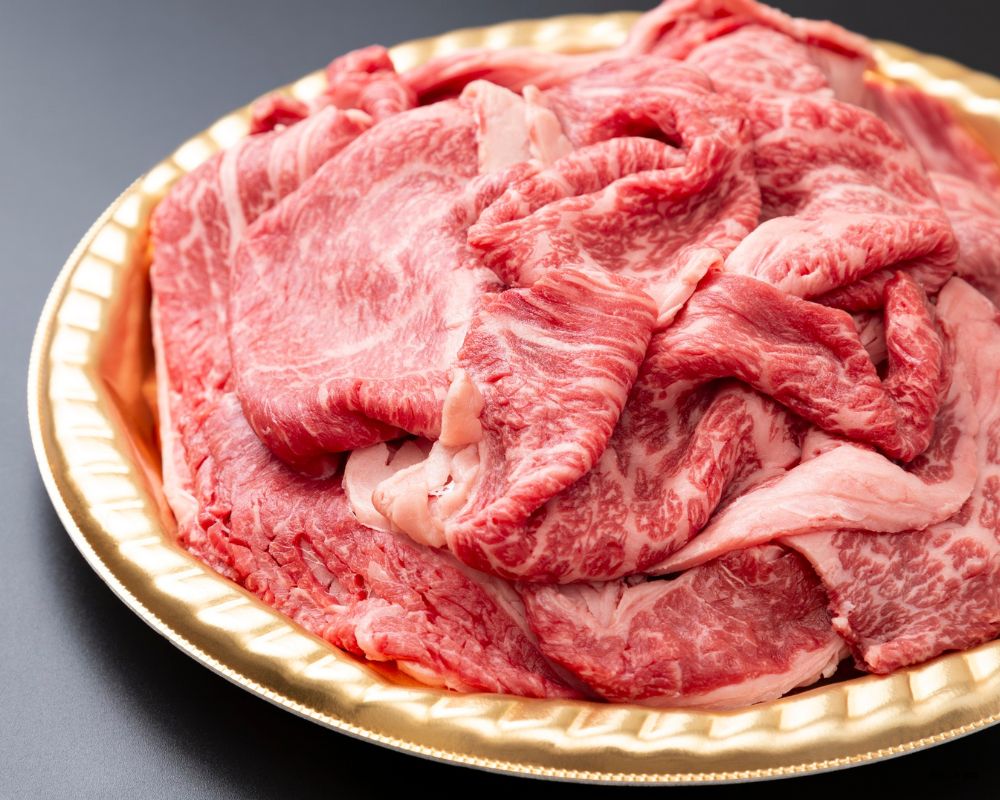
As people age, it is not uncommon to have such concerns. While rib meat has a strong umami flavor, the quality of the fat is inevitably heavy, and there is an aspect that makes it easy to get an upset stomach if you eat a lot. However, many customers also have the conflict of, “Since I came to a 烧肉 restaurant, I still want to enjoy classic 烧肉 style meat with beautiful marbling!”
Therefore, in recent years, an increasing trend mainly in high end, particular 烧肉 restaurants is the style of deliberately serving the highest grade cuts from the back side, such as “Ribeye” (Ribroast) or “Sirloin”, as “Jou 牛五花” (Premium 牛五花) or “Tokujou 牛五花” (Super Premium 牛五花) instead of rib meat.
Why purposely serve Ribeye as 牛五花?
“Wait, aren’t Ribeye and Sirloin meats you eat as steak? They have amazing marbling, won’t they be even greasier and cause an upset stomach?” you might think. However, this is the profoundness of 和牛 beef.
The highest peak of Black 和牛 beef (such as A5 rank) Ribeye is characterized by an extremely low melting point of fat compared to rib meat, even if it has plenty of beautiful, net like marbling. Because it starts melting at a temperature lower than human body temperature, the moment you put it in your mouth, it becomes liquid smoothly, leaving only ultimate umami as it settles comfortably in your stomach. There is no heavy thud characteristic of rib meat; you can comfortably enjoy only the ultimate tenderness and elegant sweet fat.
As mentioned earlier, there is no official cut name called “牛五花”. Within the broad definition of “meat around the ribs”, Ribeye is actually the meat attached to the back side of the cow’s rib bones. In other words, calling Ribeye 牛五花 is by no means a mistake.
To meet the needs of customers who “want to eat the most delicious marbled meat but do not want a heavy stomach”, restaurants are evolving to select the absolute best meat. The concept of 牛五花 is being updated to be more delicious and easier to eat along with the times.
Deep Dive! The overwhelming appeal of the “work of art” called Ribeye
Since we have the opportunity, let’s dig even deeper into the appeal of “Ribeye”, which has been highly active as 牛五花 in recent years. Ribeye, alongside Sirloin, is praised as one of the two major premium beef cuts, truly a work of art in meat.
Located between the chuck eye and the sirloin, the ribeye is the thickest part of the cow’s body, and the cross section of the meat is said to be the most beautiful. The balance between lean meat and fat is exquisite, the meat texture is fine, and it is one of the cuts that most strongly emits the sweet aroma unique to 和牛, known as 和牛ko. Furthermore, even within a single large piece of ribeye meat, it is composed of several different muscles combined, each possessing a different flavor.
The 3 rare cuts that make up the Ribeye
烧肉 professionals sometimes divide this giant block of ribeye even finer along the muscle fibers to serve.
1. Rib Core (Rib Shin)
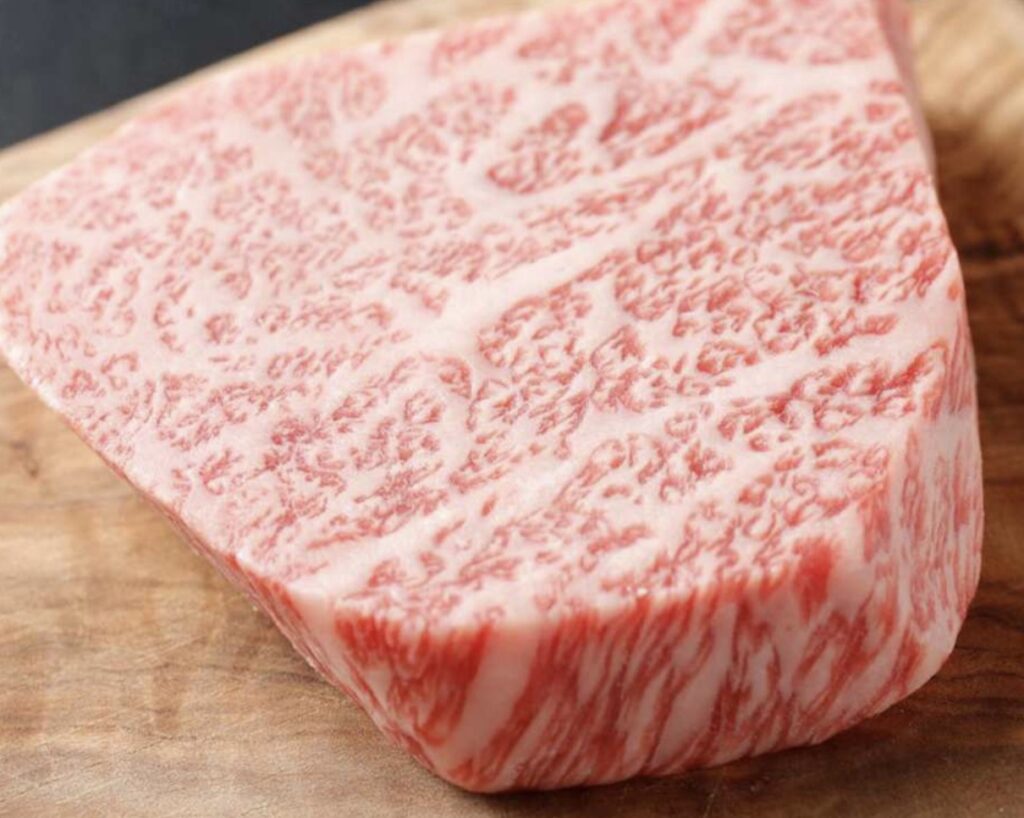
This is the circular core part located right in the dead center of the ribeye. It is the most tender part of the ribeye, the marbling is uniform, and both the appearance and taste are the absolute peak. Even if you cut it thick and grill it like a steak, it boasts a tenderness that requires no teeth. The elegant sweetness and overflowing meat juice provide an unforgettable impression once you eat it.
2. Maki (Ribeye Cap)
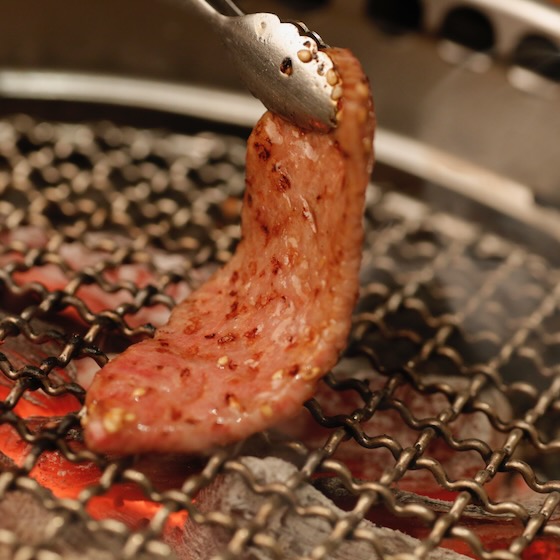
This is the part wrapped around the rib core like a frill. It is a super rare cut where only a tiny amount can be taken from a single cow. The muscle fibers are slightly firmer than the rib core, giving it a satisfying bite. In return, the flavor of the meat is extremely intense, characterized by a punchy, rich umami. It can be said to be a cut for true connoisseurs.
3. Kaburi (Ribeye Cover)
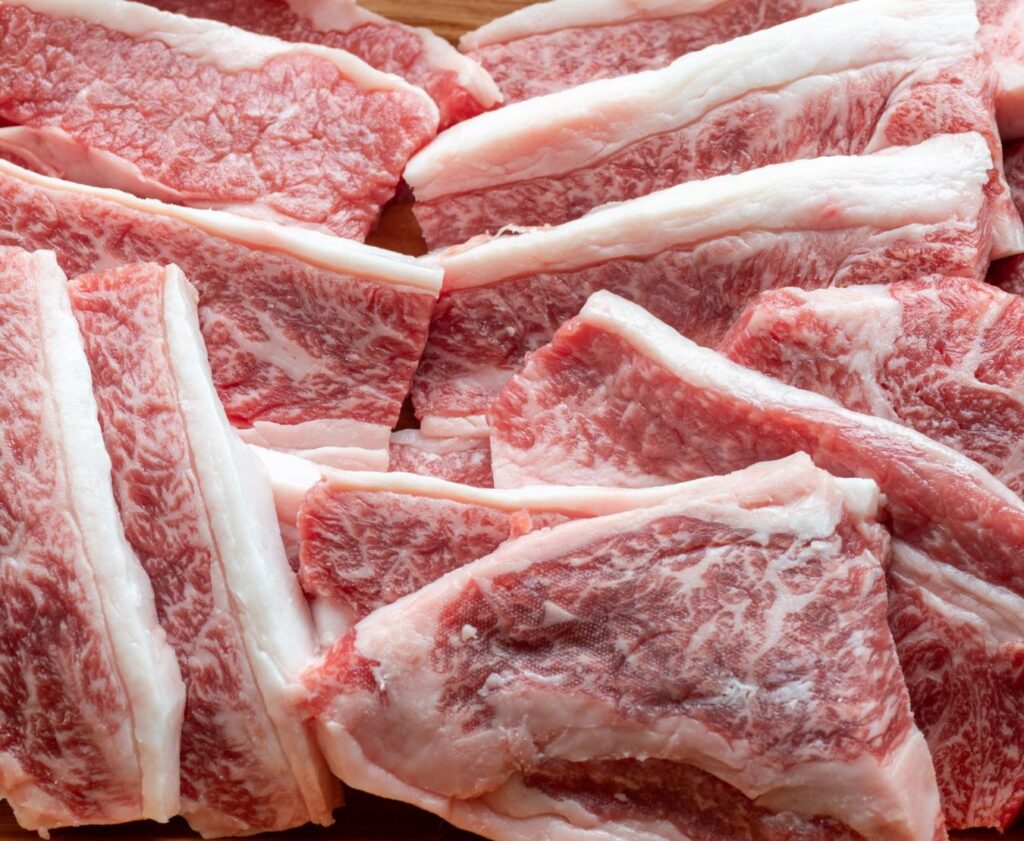
This is the outermost part of the ribeye, covering the back side. Because it is a part that is moved frequently, it has a slightly chewier texture compared to the rib core, but in return, you can enjoy a powerful taste where the umami of the fat and the flavor of the lean meat are intricately intertwined. Slicing this thinly, searing it quickly, and eating it wrapped with green onions is an absolute masterpiece.
In this way, even if we just say Ribeye, there are various highly individual parts hidden inside it. 牛五花 made with high quality ribeye provides a supreme flavor that feels like it has packed all the potential of 和牛 beef into one, being more than just tender.
The “Ultimate Grilling Method” to draw out 120% of 牛五花’s potential
Now that you have deepened your knowledge about premium ribeye and traditional delicious rib meat 牛五花, next let’s master the “grilling method” to eat it in the most delicious way possible. Actually, did you know that a huge misunderstanding lurks in the “common sense of 烧肉” that many people believe?
Is “flipping the meat only once” an urban legend?
Have you ever heard the teaching of a 烧肉 master saying, “You shouldn’t touch delicious meat unnecessarily. The meat juices will escape, so absolutely flip it only once!”? Actually, this is an erroneous spread of the theory used when grilling a thick steak on an iron griddle, and it is not suitable for 烧肉 grilled on a net.

In teppanyaki (iron griddle grilling) like steaks, putting a lid on traps the steam, providing a “steaming effect” that slowly cooks the inside. However, 烧肉 net grilling does not have a lid. Therefore, if you continue to grill one side for a long time, the bottom is exposed to the heat of the charcoal while the top is exposed to cold air. Then, the surface dries out while grilling, and the “meat juice”, which is the important umami of the meat, steadily escapes into the air or drops below the net.
Science proves the ideal method is flipping repeatedly every 10 to 15 seconds
The correct answer for delicious 烧肉, which is also scientifically proven, is to “flip it many times”. The ideal grilling method is to place the meat on the net, flip it immediately as soon as the surface starts to lightly color, and rhythmically repeat that every 10 to 15 seconds.
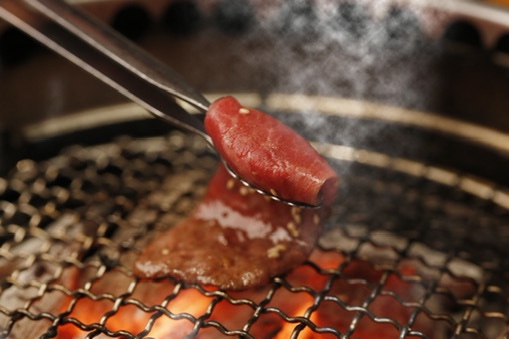
By flipping it many times, heat enters evenly from both sides, and the internal temperature of the meat rises uniformly. In other words, in lidless 烧肉, you are reproducing a state of “flipping many times = slow heating close to steaming”. By dispersing the temperature each time you flip instead of concentrating the heat on one side, you prevent rapid contraction of the meat proteins, do not destroy the meat fibers, and can cook the meat while securely trapping the delicious meat juices inside. In technical terms, this is called optimizing the Maillard reaction, but there is no need to overthink it. Just remember to “flip frequently and raise it gently.”
The quiet grilling of 黑5’s “Full Attendance” service
Dropping the excess fat of the 牛五花 while making the surface crispy and aromatic, and cooking the inside moist and bursting with meat juice. To perfectly realize this, 烧肉 黑5 adopts a “full attendance” style where professional staff stay at the customer’s table and carefully grill each piece of meat one by one.

The skilled staff of 黑5 continue to flip the meat nimbly every 10 seconds or so, with hand movements so quiet you wouldn’t even notice the meat is being grilled. By gently flipping the meat continuously without interrupting the customers’ enjoyable conversations, they finish it in the supreme state: extremely aromatic on the outside and surprisingly juicy on the inside. Furthermore, the far infrared rays of the 纪州备长炭 charcoal deliver heat gradually to the inside, drawing out a smoky aroma (kunkou) and umami unique to charcoal fires that can never be replicated by a gas flame.
Particularly for thick cuts like Nakaochi 牛五花 (Geta 牛五花) or highly marbled Ribeye, this “repeated flipping” technique results in an irresistible finish where umami juice bursts the moment you bite into it.
Sauce vs Salt? A guide to delicious ways to eat and master 牛五花
Once you have mastered the grilling method, let’s finally talk about the “seasoning” to enjoy 牛五花 to the fullest. The ideal partner changes depending on the cut of meat and the amount of fat.
The royal road of “Tare” (Sauce) with white rice
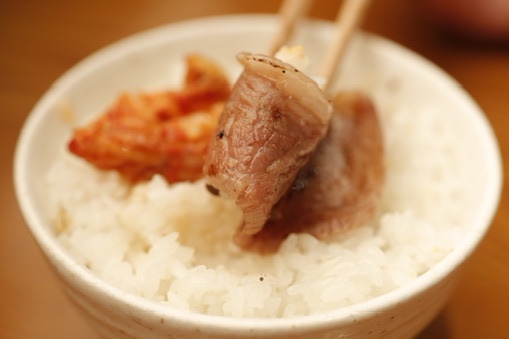
The royal road for 牛五花 is definitely “Tare”. In particular, the rich fat of traditional 牛五花 like Inner Rib creates an explosive synergistic effect of umami when combined with a sweet and spicy soy sauce glaze infused with the sweetness of garlic and fruit. The aromatic smell of the sauce slightly burning on the net. Taking that heavily coated 牛五花 and doing a one bound onto freshly cooked, glossy white rice. The fat of the meat spreading in your mouth, the saltiness and sweetness of the sauce, and the embracing power of the white rice. There is hardly any greater happiness. Tare 牛五花 is the origin and the pinnacle of 烧肉.
High quality fat awakens with “Salt and Wasabi”
However, for cuts with excellent meat quality and beautiful marbling like “Sankaku Bara (Tokujou 牛五花)”, the lighter “Sasami”, and the recent trend of highest grade “Ribeye”, we strongly recommend eating them with “Salt and Wasabi”.

High quality 和牛 fat has its own sweetness and richness. By adding just a little bit of high quality salt, the inherent sweetness of the meat tightens up and the contours become clear. Furthermore, try putting plenty of real Wasabi on top. Strangely enough, when eaten together with high quality fat, the sharp spiciness of the Wasabi disappears, leaving only a refreshing sensation and a crisp aroma. This refreshingness of the Wasabi maximizes the sweetness of the premium fat while making the aftertaste surprisingly clean. Even those who felt “the fat is heavy” will be surprised to find that they can eat endlessly with this method.
If you become able to change how you eat based on your mood that day, how hungry you are, and above all, “the cut and quality of the meat”, you can call yourself a true advanced 烧肉 eater, no, a 烧肉 master.
Conclusion: With the spice of knowledge, 牛五花 becomes even more delicious
How was it? Even the usual meat you used to order without much thought, saying “牛五花 for now!”, doesn’t the dish in front of you shine brighter and look more special when you know “which cut” of the cow’s body it is, “what history” it went through to settle into its current form, the “latest trend” of the Ribeye’s breakthrough, and “how to grill it to make it the most delicious”?
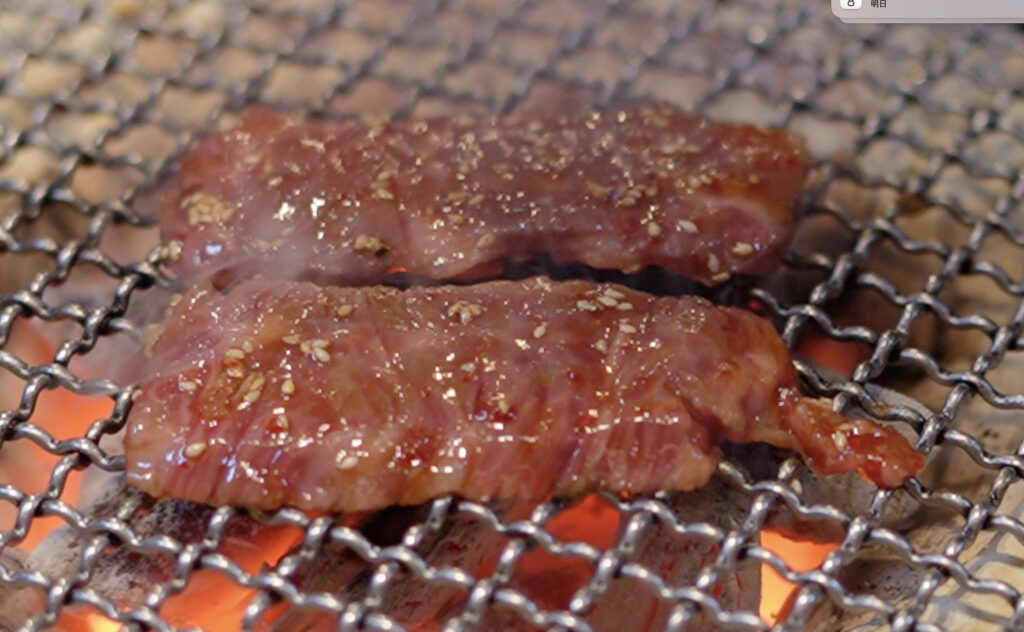
烧肉 is not a simple dish where you just put sliced raw meat on a net, heat it, and eat it. Receiving the life of a cow, appreciating the efforts of the producers, knowing the individuality of each cut, enjoying the conversation with the heat level, and finishing it to your own perfect state. It is a wonderful food culture that is deeply profound and satisfies both your intellectual curiosity and your stomach at the same time. During your next 烧肉 visit, please fully enjoy the deep flavor of 牛五花 and Ribeye while recalling today’s knowledge. It will surely be your most delicious 烧肉 experience ever.
If you want to taste ultimate 牛五花 and Ribeye along with knowledge, head to 和牛 烧肉 黑5

At 烧肉 黑5, we serve various cuts of carefully selected, highest grade Black 和牛 beef to everyone in their most delicious state. We adopt a “Full Attendance Style” where professional staff quietly execute perfect grilling right in front of the customers without interrupting conversations. Please experience with your own 牛舌 the ultimate meat, bursting with meat juices and cloaked in the mellow aroma of 纪州备长炭 charcoal. We sincerely look forward to your visit.
Store Name: 烧肉 黑5 Main Store
Address: Cima 100 Bldg 1F, 2-46-3 池袋, Toshima-ku, Tokyo 171-0014
Nearest Station: 5 minute walk from JR 池袋 Station West Exit
Business Hours: 17:00 – 24:00 (L.O. 23:30)
Regular Holiday: Open year round
Store Name: 烧肉 黑5 池袋 East Exit Store
Address: Need Bldg 2F, 1-42-16 Higashi-池袋, Toshima-ku, Tokyo 170-0013
Nearest Station: 5 minute walk from JR 池袋 Station East Exit
Business Hours: 17:00 – 24:00 (L.O. 23:00)
Regular Holiday: Open year round
Store Name: 烧肉 黑5 歌舞伎町
Address: Sankei Bldg 1F, 2-21-4 歌舞伎町, 新宿-ku, Tokyo
Nearest Station: 5 minute walk from Seibu-新宿 Station / 7 minute walk from 新宿-sanchome Station
Business Hours: 18:00 – 5:00 next day (L.O. 4:00)
Regular Holiday: Open year round

